
Supplier: GAOYUAN
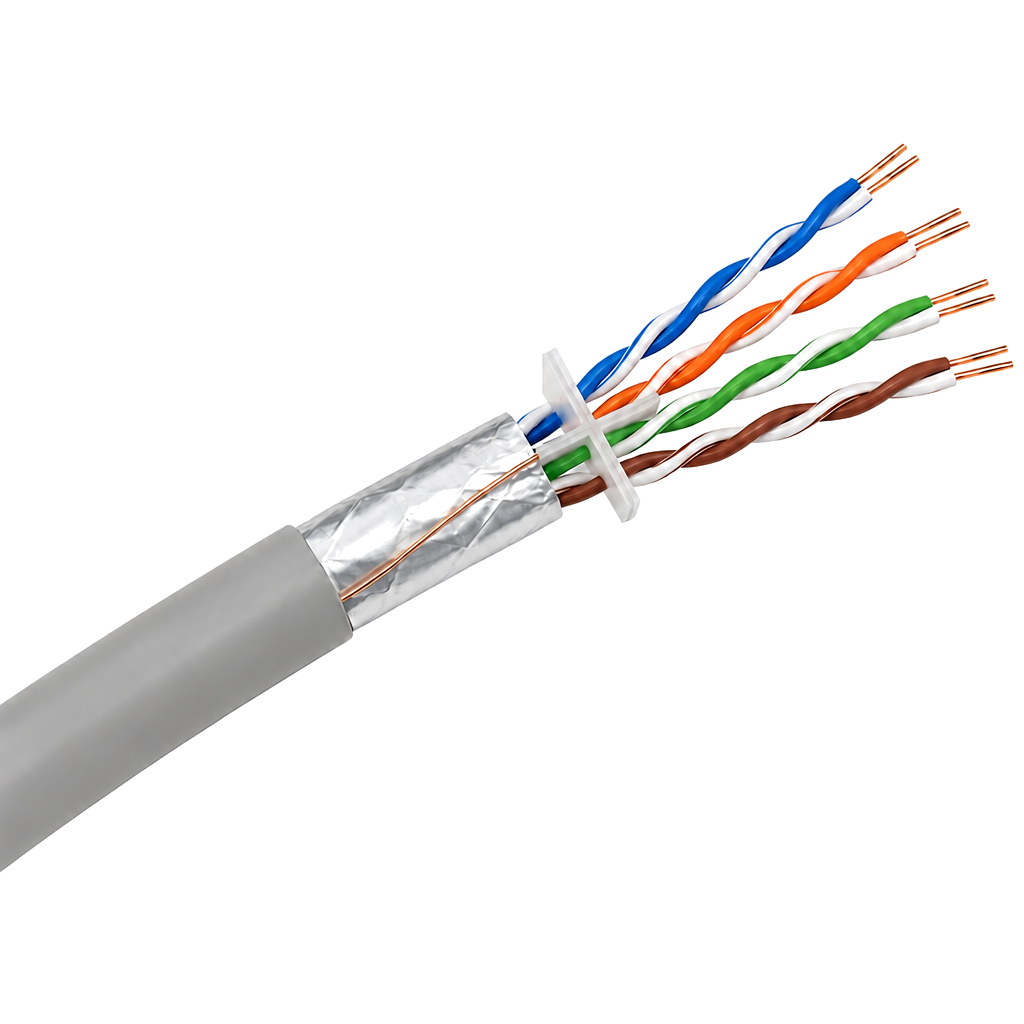
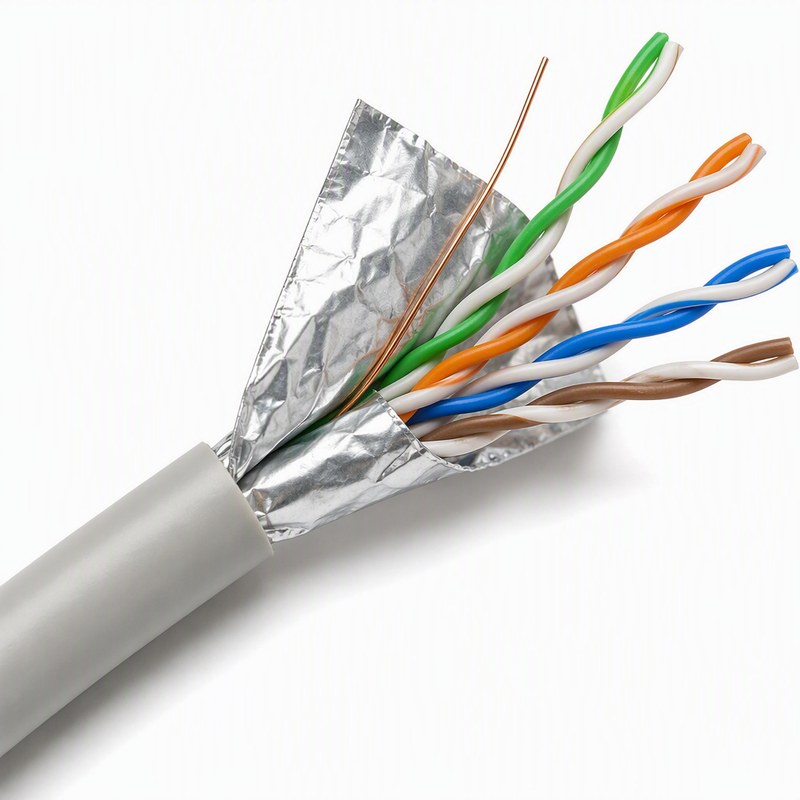
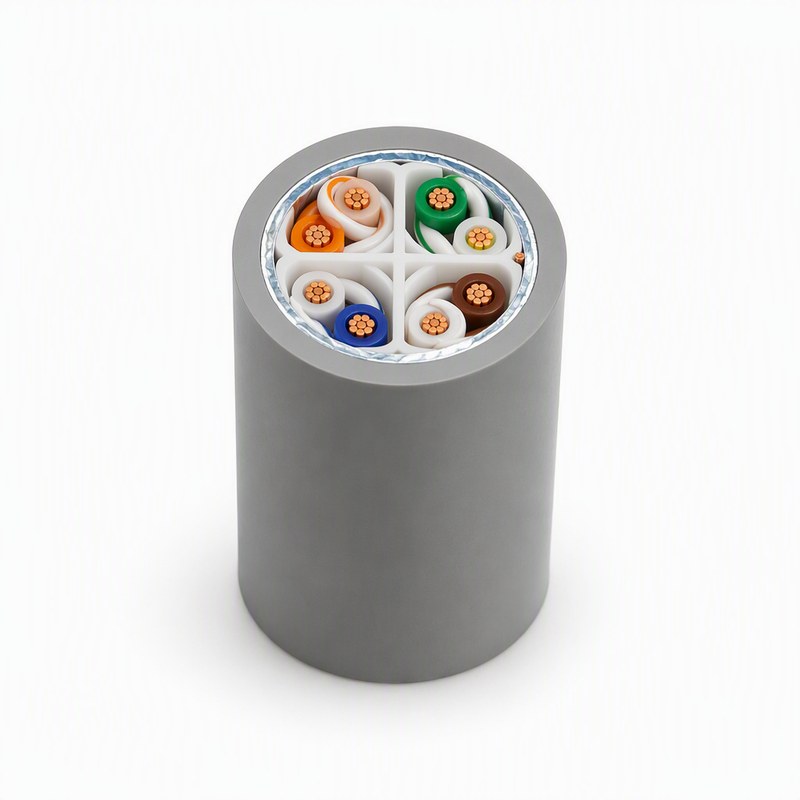
Shielded network cable combining four twisted pairs with an aluminum foil shield, a built-in drain wire and a cross separator in one jacket, for reliable data transmission in structured cabling and network installations.
Supplier: GAOYUAN
Shielded network cable combining four twisted pairs with an aluminum foil shield, a built-in drain wire and a cross separator in one jacket, for reliable data transmission in structured cabling and network installations.
Every network is only as fast as its weakest link, and on a real installation the weakest link is usually not the switch, the router, or the server — it is the cable running through the walls. Structured cabling lives where the noise lives: beside power cables, under lighting circuits, past motors, elevators, and switchgear. On an unshielded cable, that noise couples onto the pairs and corrupts the data traveling through them — errors that show up as slowdowns, retransmissions, and intermittent failures that are brutal to trace. The shielded network cable addresses this directly. It takes the standard four twisted pairs and surrounds them with an aluminum foil shield, adds a built-in drain wire to ground that shield properly, and holds the pairs apart with a cross separator so they cannot interfere with each other. One jacket, four layers of protection, one clean data path. That is the core value proposition of this cable.
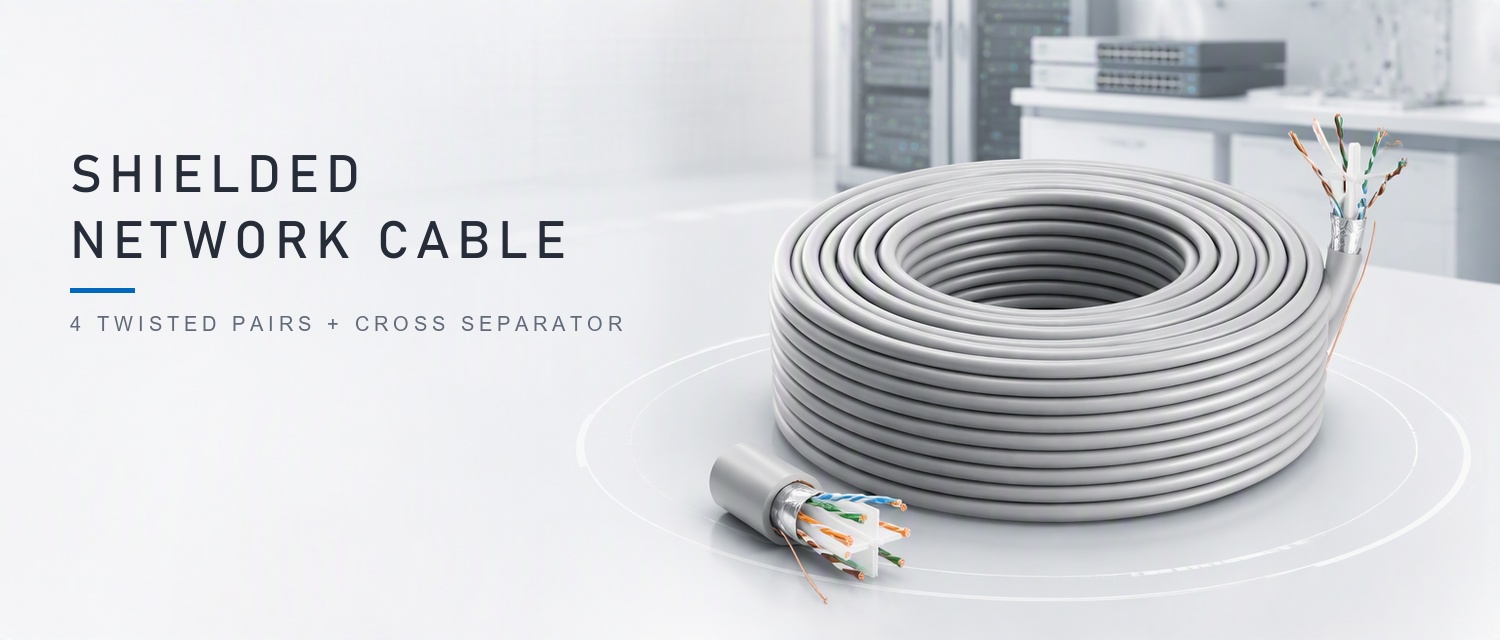
This shielded network cable is a four-pair data cable engineered for installations where electrical noise would otherwise threaten signal integrity. Its design and specification set are as follows.
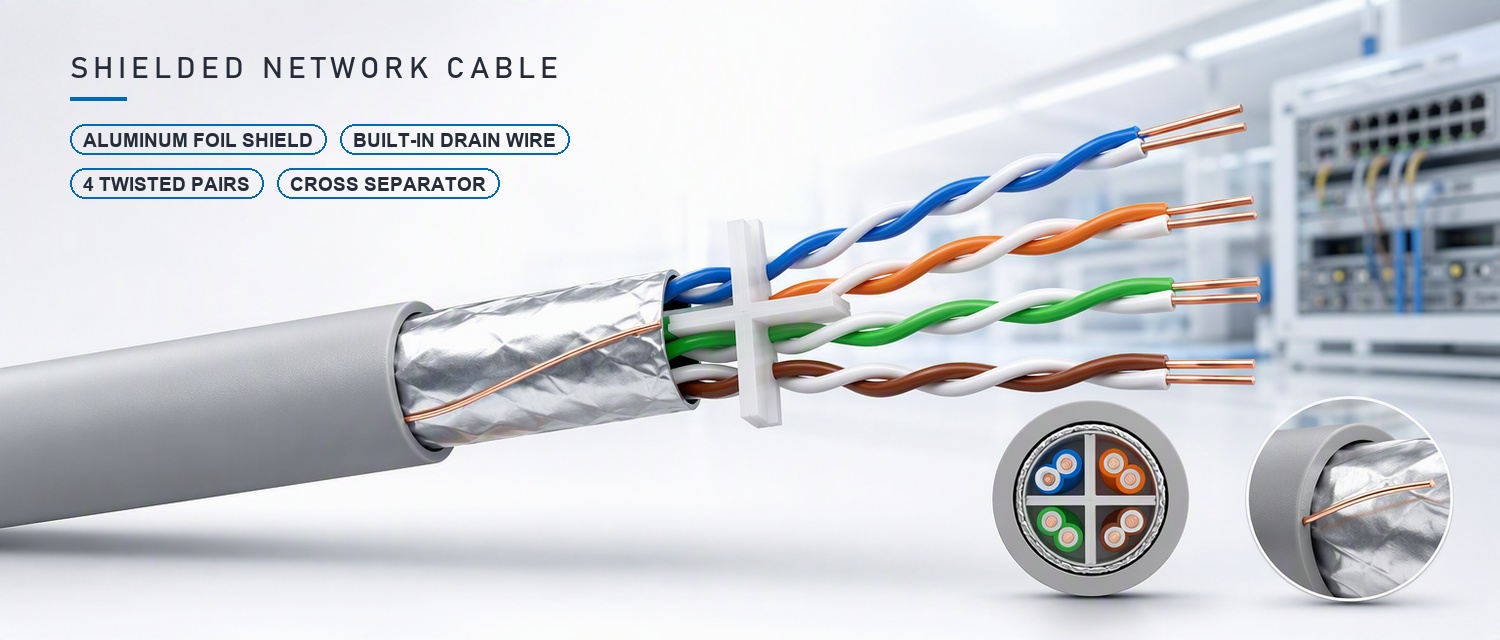
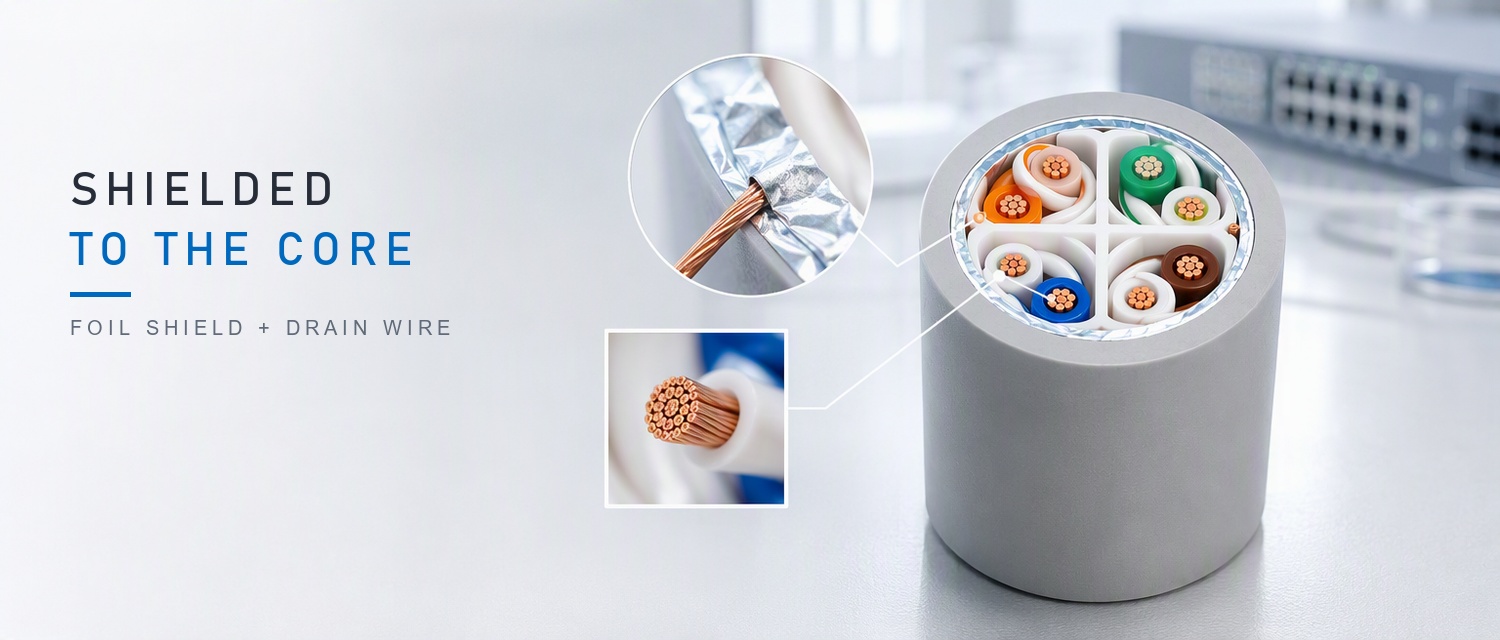
An aluminum foil shield where interference lives. The foil is the cable's first defense. Wrapped around the four pairs, it blocks the electromagnetic noise radiated by power cables, lighting, motors, and other equipment — the interference that would otherwise ride onto the pairs and corrupt the data. In a noisy building, the shield is what keeps the network clean.
A drain wire that makes the shield actually work. A shield is only as good as its ground path, and that is what the drain wire is for: one continuous conductor running alongside the foil, ready to be terminated to ground at the connection point. It gives the installer a clean, reliable way to ground the shield — without it, a foil shield can float and lose its purpose.
Four twisted pairs, twisted for a reason. Twisting is a form of shielding in itself: noise couples equally into both wires of a pair and cancels out at the receiving end. The four standard color-coded pairs give the cable a data path built on the most widely used data-cable construction in the industry — pairs any installer recognizes and terminates without hesitation.
A cross separator that keeps the pairs honest. When four pairs run close together, each pair can pick up interference from its neighbors. The cross separator holds the pairs apart at fixed positions along the whole run, reducing that pair-to-pair interference and keeping the cable's internal geometry consistent — detail that matters on high-performance installations.
Built for the way networks are actually installed. From the patch panel to the workstation, this cable matches how structured cabling really happens: one consistent construction along every run, familiar to terminate, and available in quantity for projects of any size.
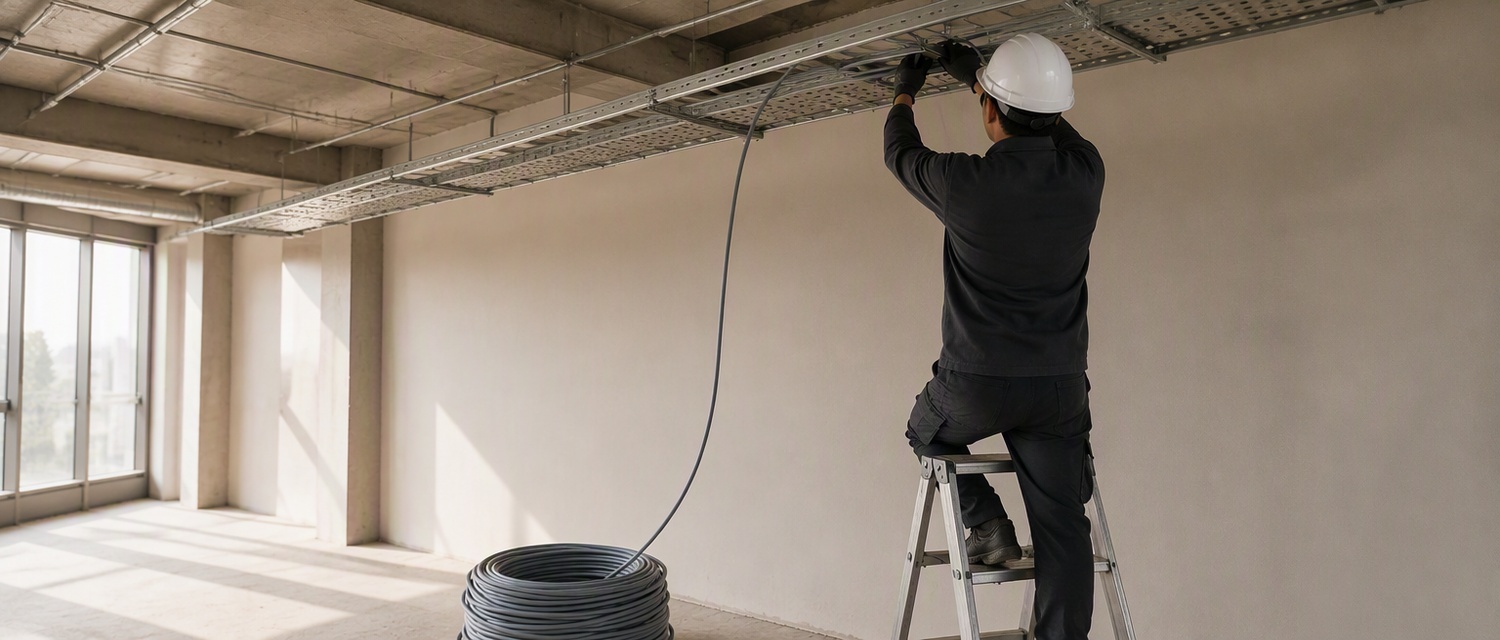
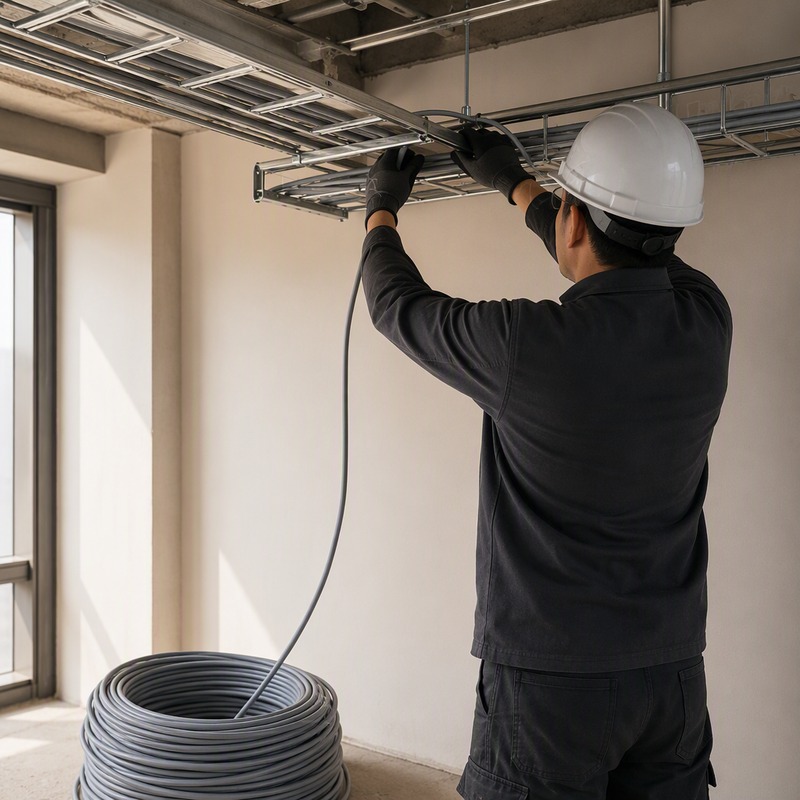
Office and Commercial Structured Cabling Offices put data cables in the same ceilings and risers as power and lighting, where noise is unavoidable. The shielded network cable applies directly to this work: the foil shield and drain wire keep the data path clean in exactly the environment where unshielded cable struggles.
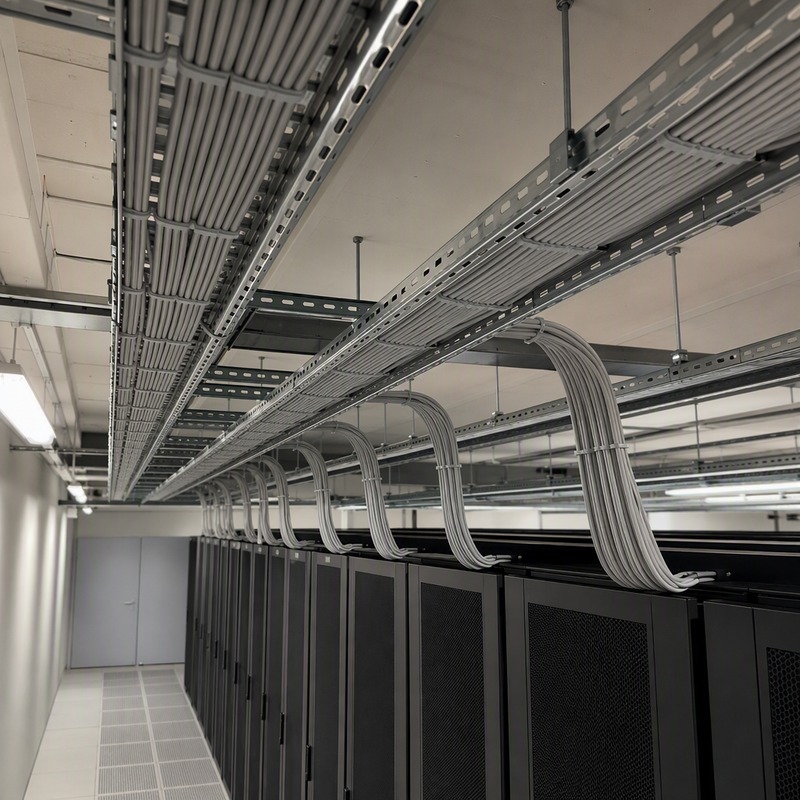
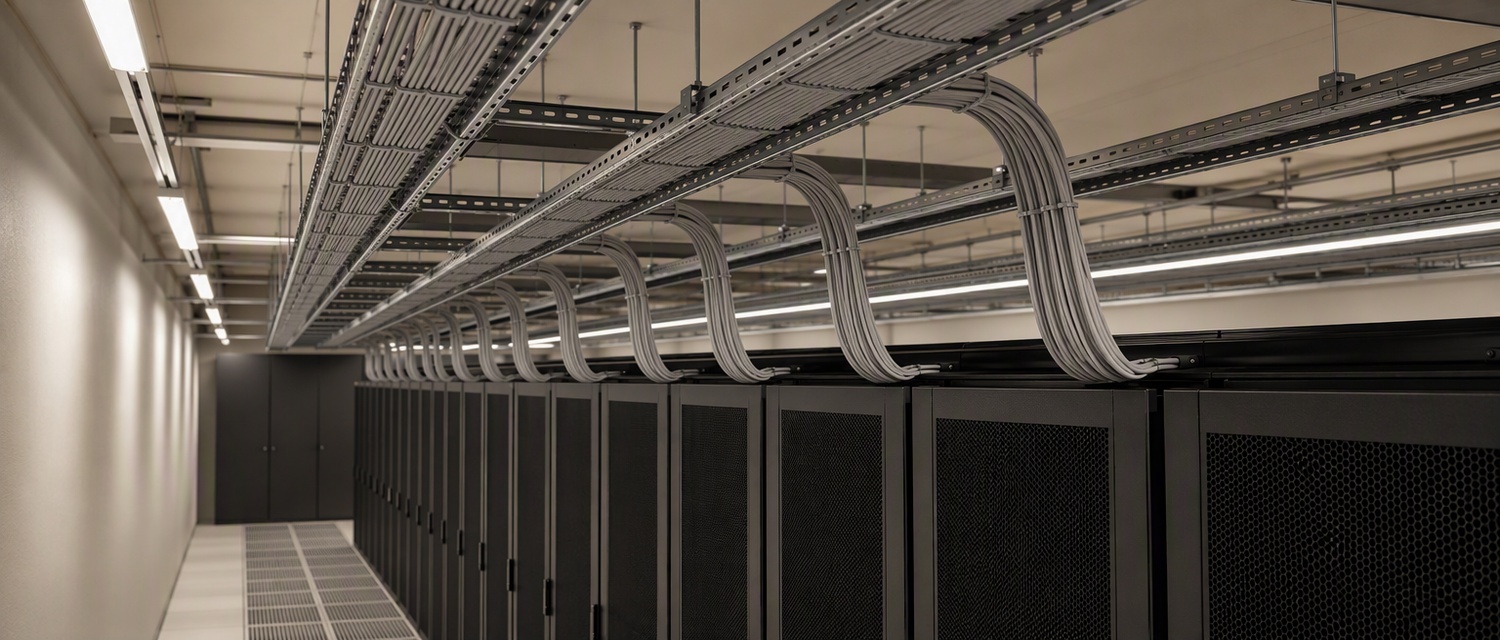
Data Center and Equipment Room Patching Equipment rooms concentrate switches, power distribution, and hundreds of patch cables in a small space — a dense electrical environment by design. The shield keeps long patch and backbone runs stable, and the cross separator keeps pair geometry consistent in the same trays that carry power cabling.
Network Runs in Industrial and Noisy Environments Factories and machine rooms place network cables beside motors, drives, and heavy power feeders — the harshest environment a data cable can face. This is where shielding earns its keep: the foil blocks the noise, the drain wire grounds the shield, and the data arrives the way it left.
Network Upgrades and New Installations Whether it is a new building being wired or an existing network being upgraded, the decision is made once, in the ceiling: shielded cable protects the installation against noise it cannot see, for the life of the network. One consistent cable type across the project keeps installation fast and maintenance predictable.
UTP is the economical choice where the environment is clean; foil-shielded cable with a drain wire adds the protection most real installations need; and braid-plus-foil shielded cable is reserved for the harshest electromagnetic environments. Choosing shielded cable where noise is present protects the network before a single error occurs.
Install the cable without sharp bends or kinks, and do not crush it with staples or ties — the foil and the pair geometry both depend on gentle handling. When preparing the ends, strip carefully so the blade does not nick the foil, the drain wire, or the conductor insulation: a damaged shield is damaged noise protection, and a nicked conductor is a future fault. Keep the twist of each pair intact right up to the termination. Terminate and ground the drain wire properly at the connection point — a shielded cable with an ungrounded shield loses most of its protection. Where layout allows, keep data runs clear of the strongest interference sources, and store coils in a dry place before installation.
One procurement observation worth noting: on a network project, cable faults surface as intermittent slowdowns and errors that are far harder to trace than to prevent. The shield and drain wire are the prevention — built into the cable, working along every meter of the run. This shielded network cable is designed for data transmission in structured cabling and network installations. Always follow the relevant installation standards and safe working practice on site.