Supplier:Xinghui
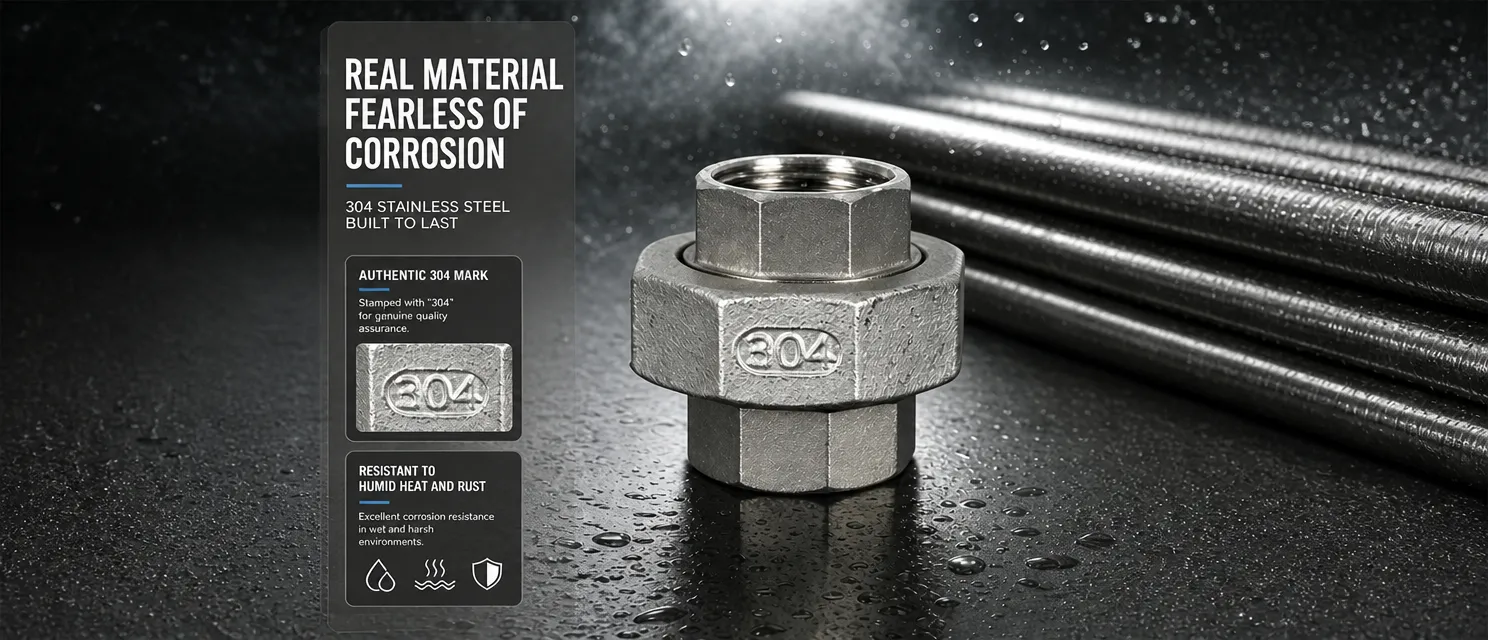
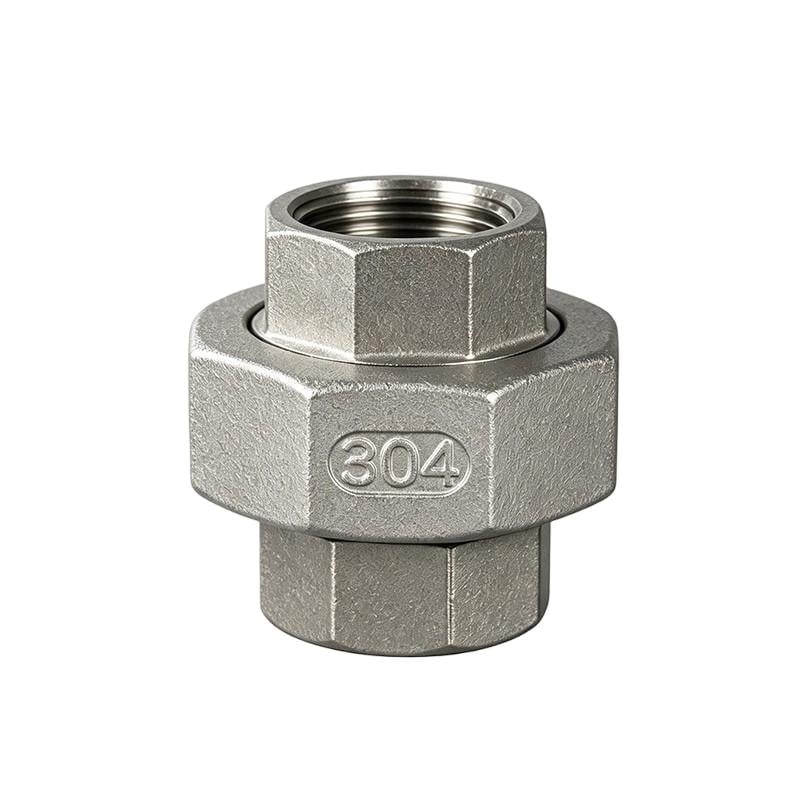
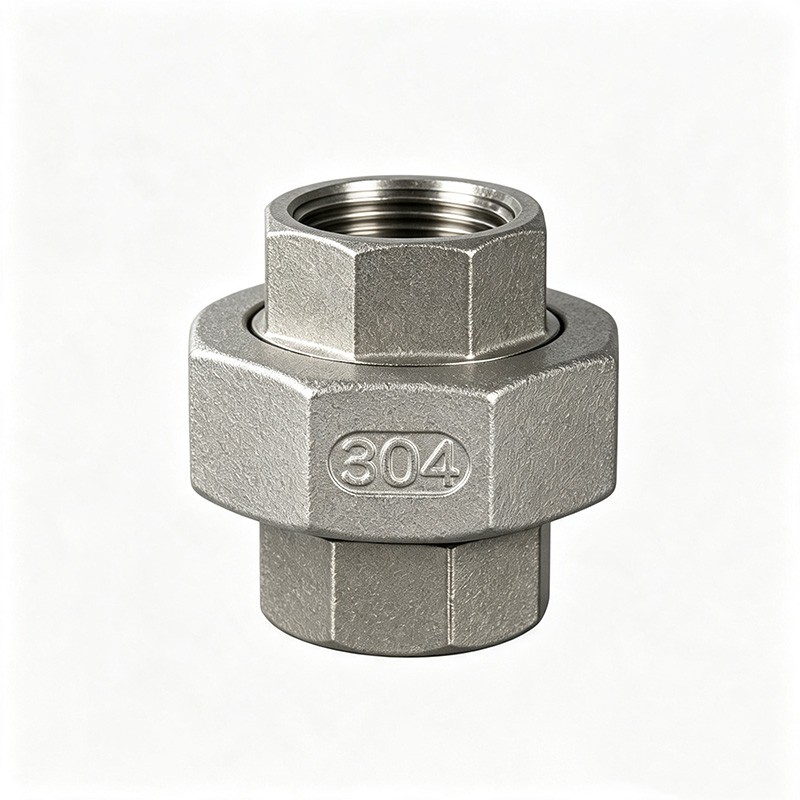
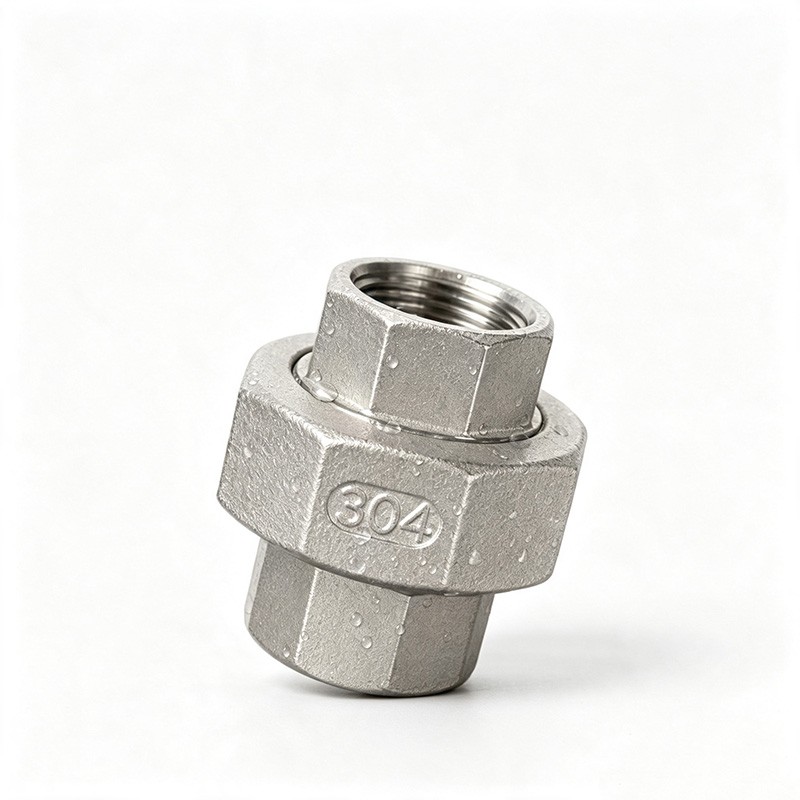
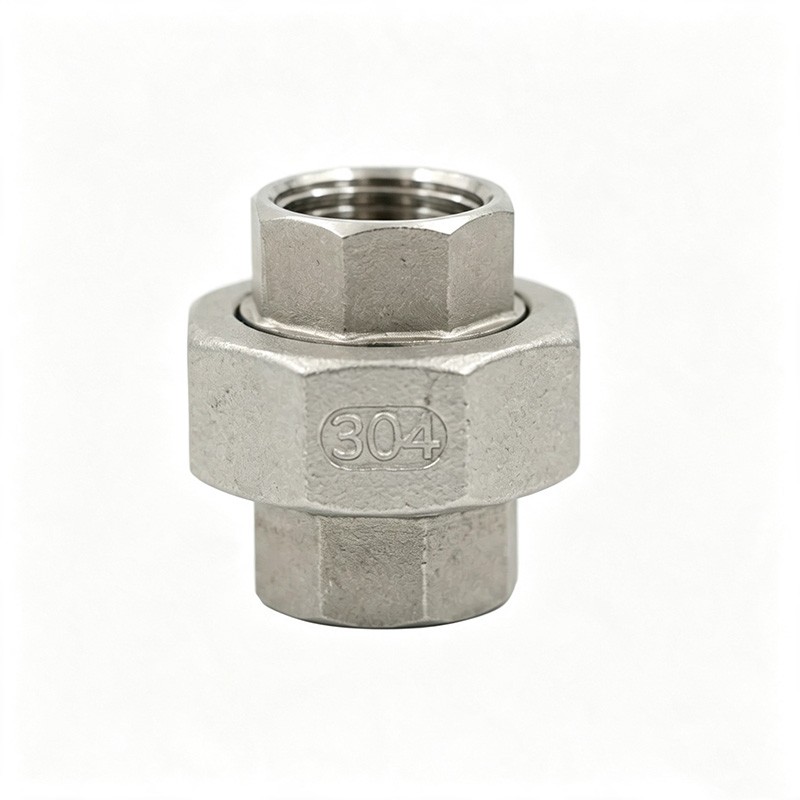
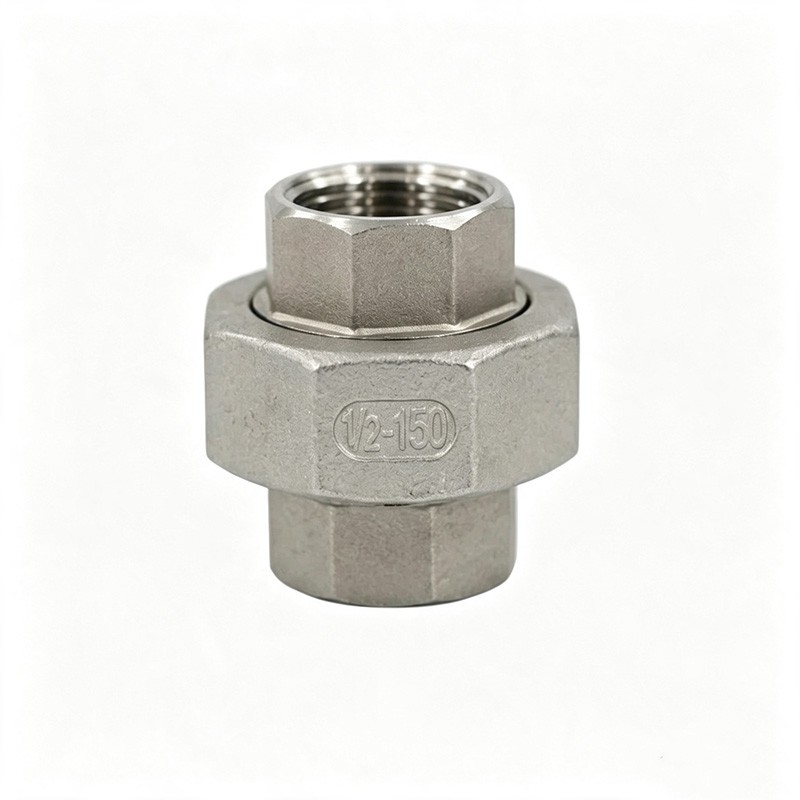
Forged brass female-threaded union with swivel nut for quick disconnection, dual sealing, corrosion-resistant, for water, oil, gas and industrial lines.
Supplier:Xinghui
Forged brass female-threaded union with swivel nut for quick disconnection, dual sealing, corrosion-resistant, for water, oil, gas and industrial lines.
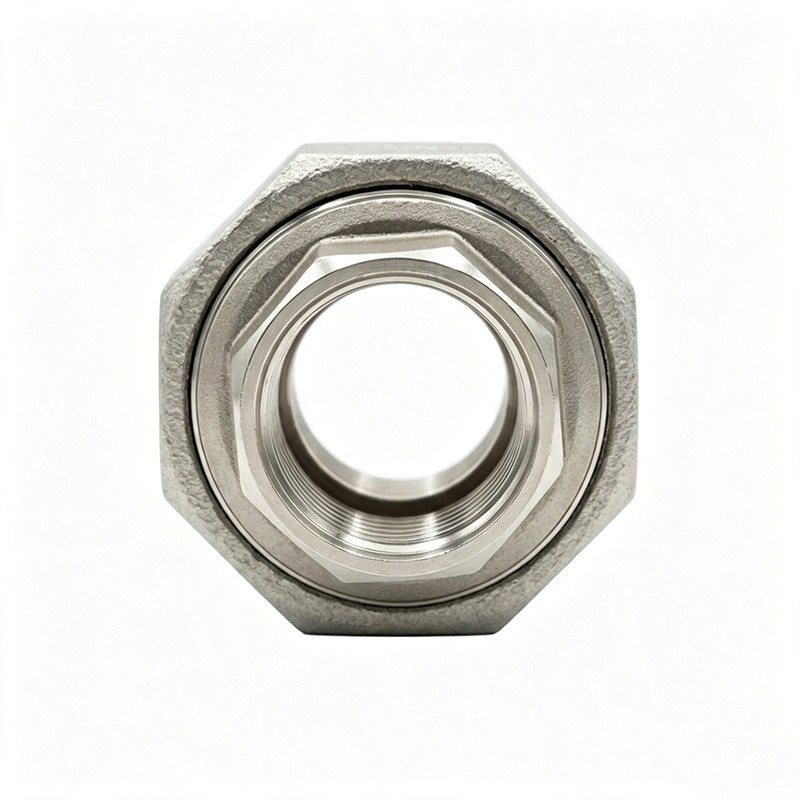
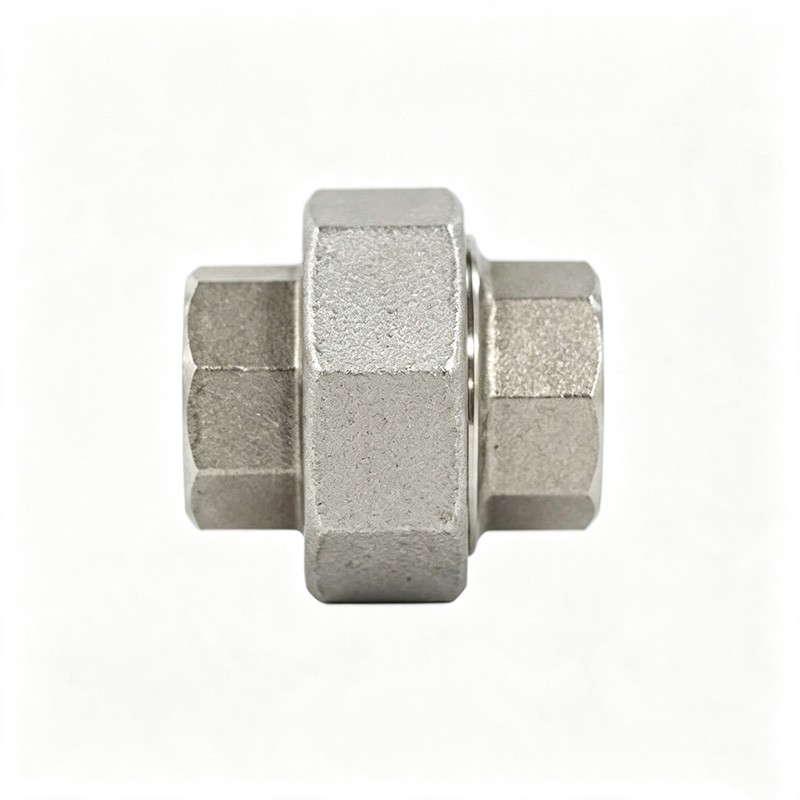
A Female-Thread Union is a three-piece brass pipe fitting that creates a serviceable break-point in any threaded pipeline. The assembly includes two female-thread end connectors — one for each pipe end — and a free-rotating union nut that draws both connectors into a sealed joint. When service is required, loosening the nut separates the pipeline without rotating adjacent pipes or disturbing connected equipment. This Female-Thread Union is manufactured from forged brass HPb59-1 and stocked in port sizes G1/2 through G1-1/2.
| Parameter | Specification |
|---|---|
| Main Body Material | Forged brass HPb59-1 / CW617N; 304 stainless steel or lead-free brass on request |
| Surface Treatment | Nickel-plated or natural polished finish |
| Structure | Three-piece: left female-thread connector + right female-thread connector + union nut |
| Port Sizes | G1/2, G3/4, G1, G1-1/4, G1-1/2; larger sizes customizable |
| Thread Standard | British G pipe thread (parallel); NPT American-standard thread available on request |
| Sealing Method | Conical-to-spherical hard seal + NBR nitrile-rubber or silicone soft-seal gasket (dual layer) |
| Nominal Pressure | ≤1.6 MPa (cold/hot water service) |
| Temperature Range | -20°C to 120°C standard; silicone gasket version rated to 180°C |
| Applicable Media | Cold water, hot water, drinking water, compressed air, low-pressure oil, weak acid/alkali fluids |
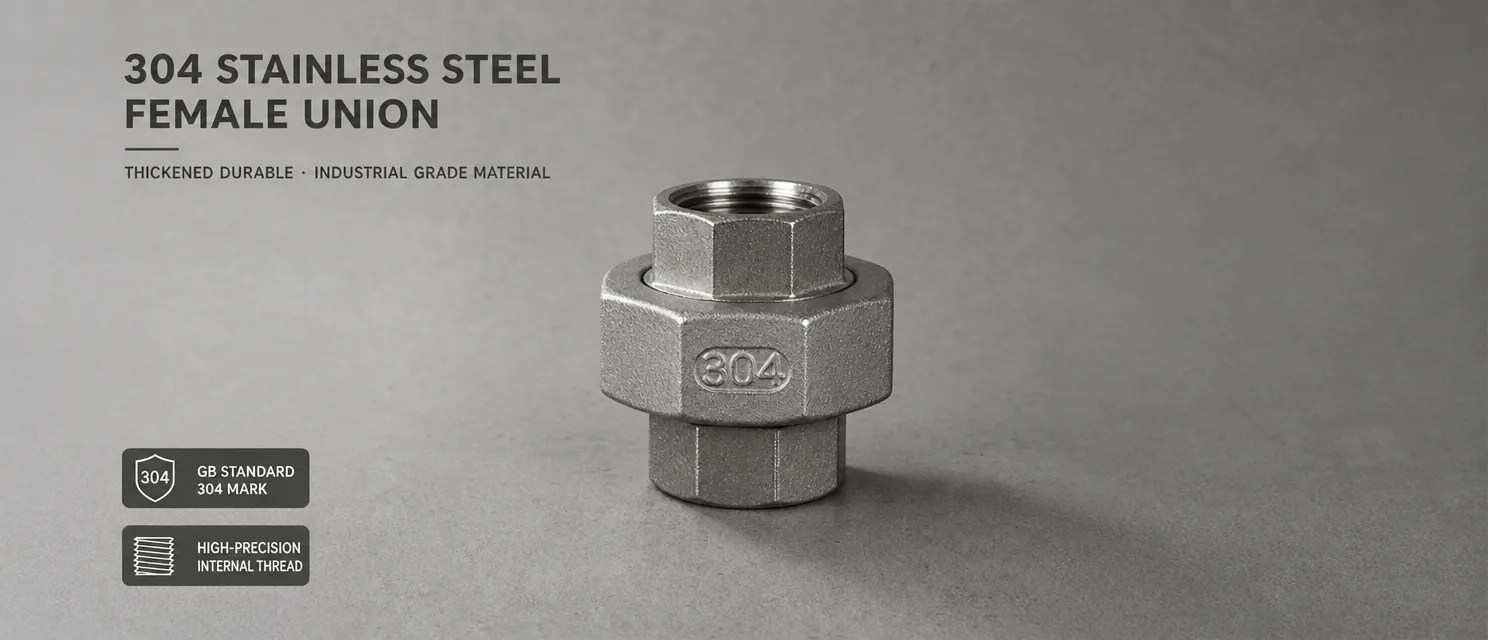
This Female-Thread Union is produced from forged brass (HPb59-1 / CW617N). Forging aligns the metal grain and eliminates the porosity typical of cast fittings, reducing micro-crack risk at sealing surfaces and thread roots through repeated disassembly cycles. The nickel-plated surface option adds a corrosion barrier in humid or outdoor service. Material selection follows the media and compliance requirements: standard HPb59-1 brass suits most water and compressed-air applications; 304 stainless steel is specified for mildly corrosive service; lead-free brass meets drinking-water regulations in North America and Europe.
Thread standard is British G pipe thread (BSP parallel) by default; NPT is available to order. Before specifying the Female-Thread Union, confirm the thread family on existing pipework. In retrofit projects where a copper-to-PEX adapter marks the material-transition point, check whether the adapter outlet uses G or NPT before ordering — both standards look similar on common sizes but are mechanically incompatible and cannot be force-fitted.
The sealing geometry of this Female-Thread Union uses a precision conical surface on one end connector mating against a spherical seat on the opposite face. This metal-to-metal contact forms the primary hard seal. The NBR nitrile-rubber or silicone gasket inside the union nut adds a soft-seal backup that compensates for surface irregularities and absorbs vibration. In compressed-air networks and pipelines serving equipment such as a hydraulic diverter valve, this dual-seal design typically maintains reliability longer than a single flat-face gasket under comparable cyclic pressure conditions.
Rated working pressure for the standard Female-Thread Union is ≤1.6 MPa, covering residential, HVAC, and light industrial applications. Operating temperature range is -20°C to 120°C for the NBR gasket version, extending to 180°C with the silicone gasket option.
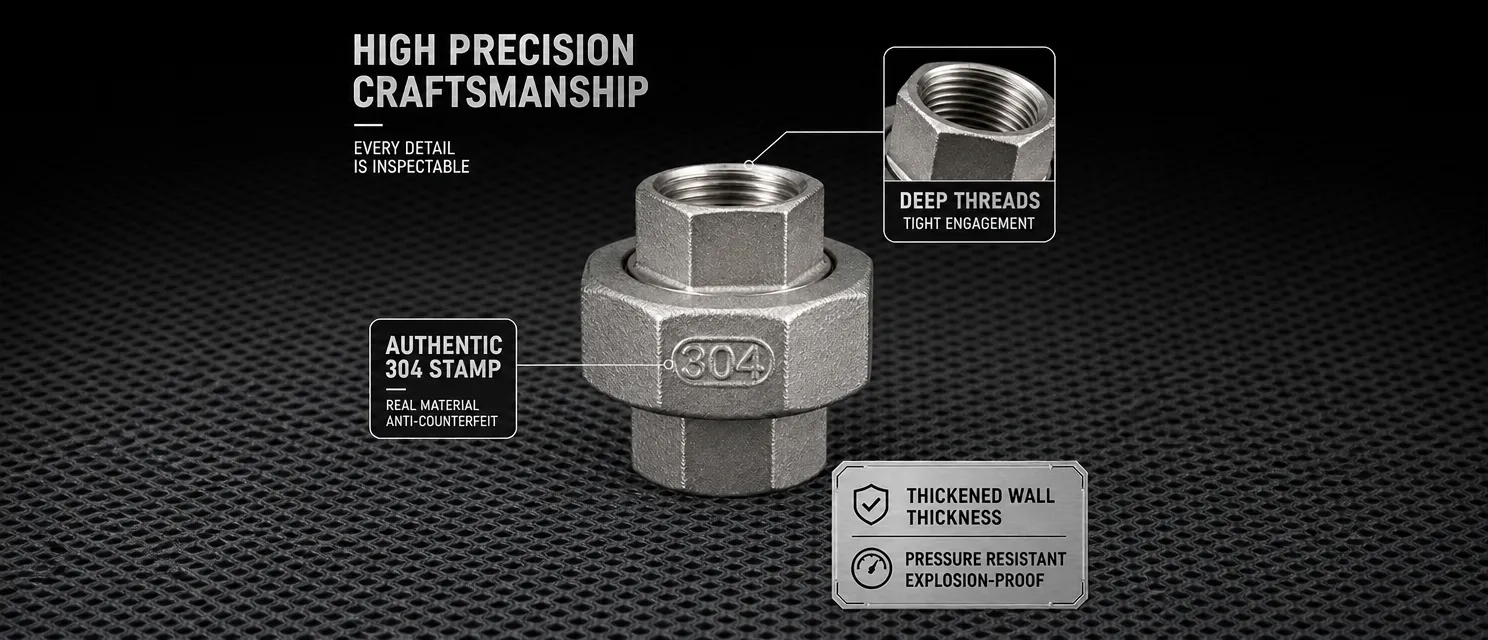
The key installation benefit of a Female-Thread Union is no-rotation assembly. Both end connectors thread independently onto their pipe ends. The union nut slides over one connector, engages the opposite face, and tightens to seal — neither connected pipe rotates. This is essential when both pipe ends are fixed to equipment housings, floor brackets, or structural mounts.
Maintenance with a Female-Thread Union is equally efficient. One operator can loosen the nut, remove the component between the connectors, and reassemble without a second person or full system shutdown beyond the local isolation valve. Chamfered thread inlets on both connectors prevent cross-threading in confined spaces. The pre-loaded sealing gasket inside the union nut makes correct assembly reliable, even for a first-time installer of a Female-Thread Union.
Before installing a Female-Thread Union, confirm the port size matches the pipe thread diameter and clear debris from both thread entries. Apply three to five even layers of PTFE tape to the male pipe threads, wrapping in the tightening direction. Thread each end connector onto its pipe end and hand-tighten first, then apply final torque with a wrench. Slide the union nut over one connector, align the sealing face against the opposite connector, and verify the gasket is correctly seated before tightening. Use moderate torque — overtightening can deform the sealing surface or crack the nut. After installation, perform a pressure test. If seepage occurs, check gasket seating before increasing torque. Replace the sealing gasket at the first sign of hardening or cracking.
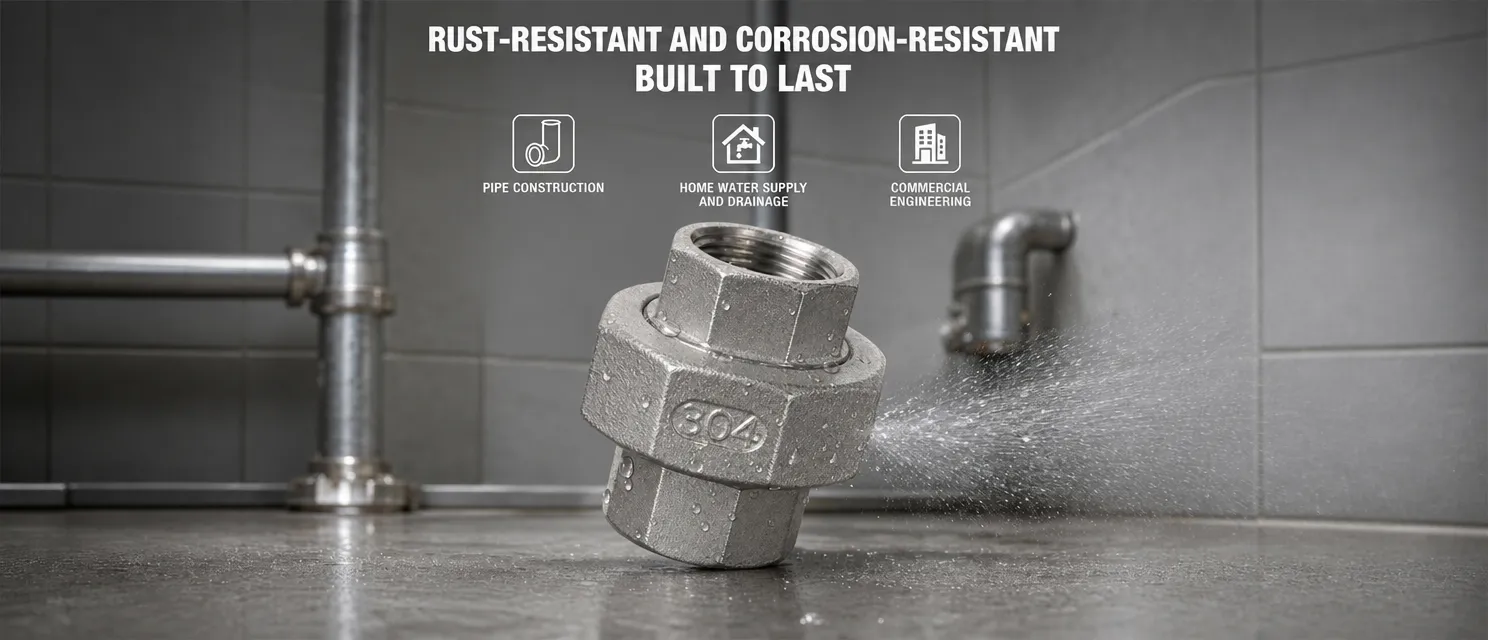
A Female-Thread Union is installed wherever future service access is anticipated. In residential and HVAC systems, typical positions include the inlet and outlet of water heaters, circulating pumps, floor-heating manifolds, and pre-filter housings. Placing a Female-Thread Union at each connection point allows the appliance to be removed without cutting fixed pipework.
In industrial systems, a Female-Thread Union is positioned on each side of pumps and control components. Where a pipeline segment includes a hydraulic diverter valve, unions flanking that component allow servicing or replacement while the surrounding system stays operational.
In renovation projects, a Female-Thread Union is commonly paired with a copper-to-PEX adapter at material-transition points. The copper-to-PEX adapter handles the material change; the Female-Thread Union immediately downstream provides the break-point that ensures the adapter joint is not disturbed during future maintenance.

Compared with a fixed straight coupling, a Female-Thread Union adds a maintenance access point that can substantially reduce equipment replacement time. Compared with cast-iron or malleable-iron unions, brass delivers better corrosion resistance for drinking-water and food-grade pipelines, along with higher sealing-surface precision and smoother nut rotation. Compared with PPR or PVC plastic unions, a brass Female-Thread Union maintains dimensional stability across the full service temperature range, resists UV degradation outdoors, and tolerates repeated disassembly without surface damage at the sealing face.
This Female-Thread Union is manufactured to mainstream European and North American pipe-fitting dimensional standards. Material test reports, dimensional drawings, and specification sheets are available on request. OEM options include custom packaging, laser-engraved markings, and lead-free material certification for export projects subject to drinking-water component regulations. Sample orders are supported and favorable pricing is available for project volumes.