Supplier: GAOYUAN
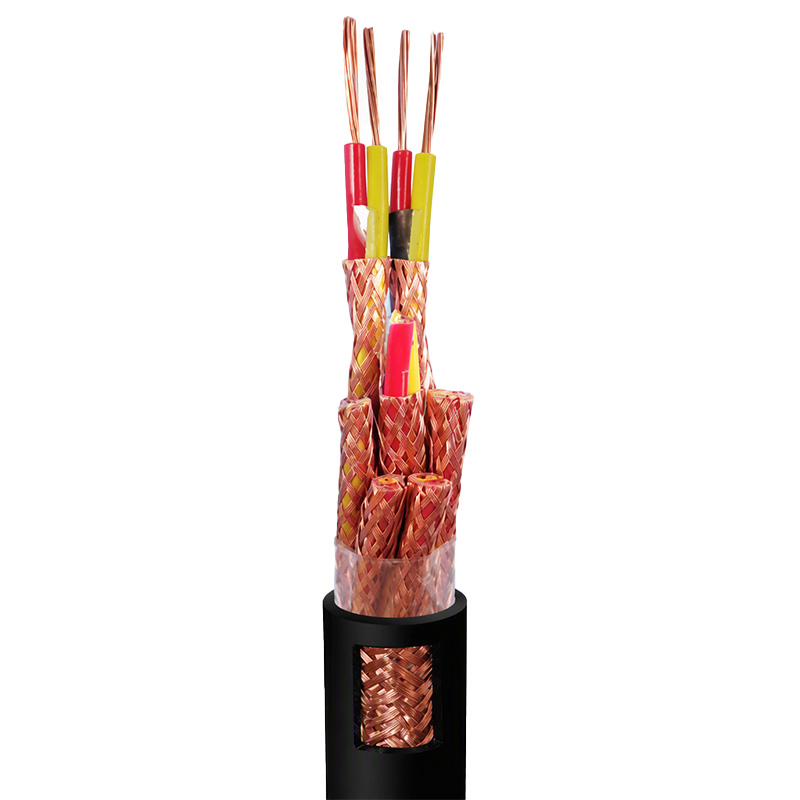
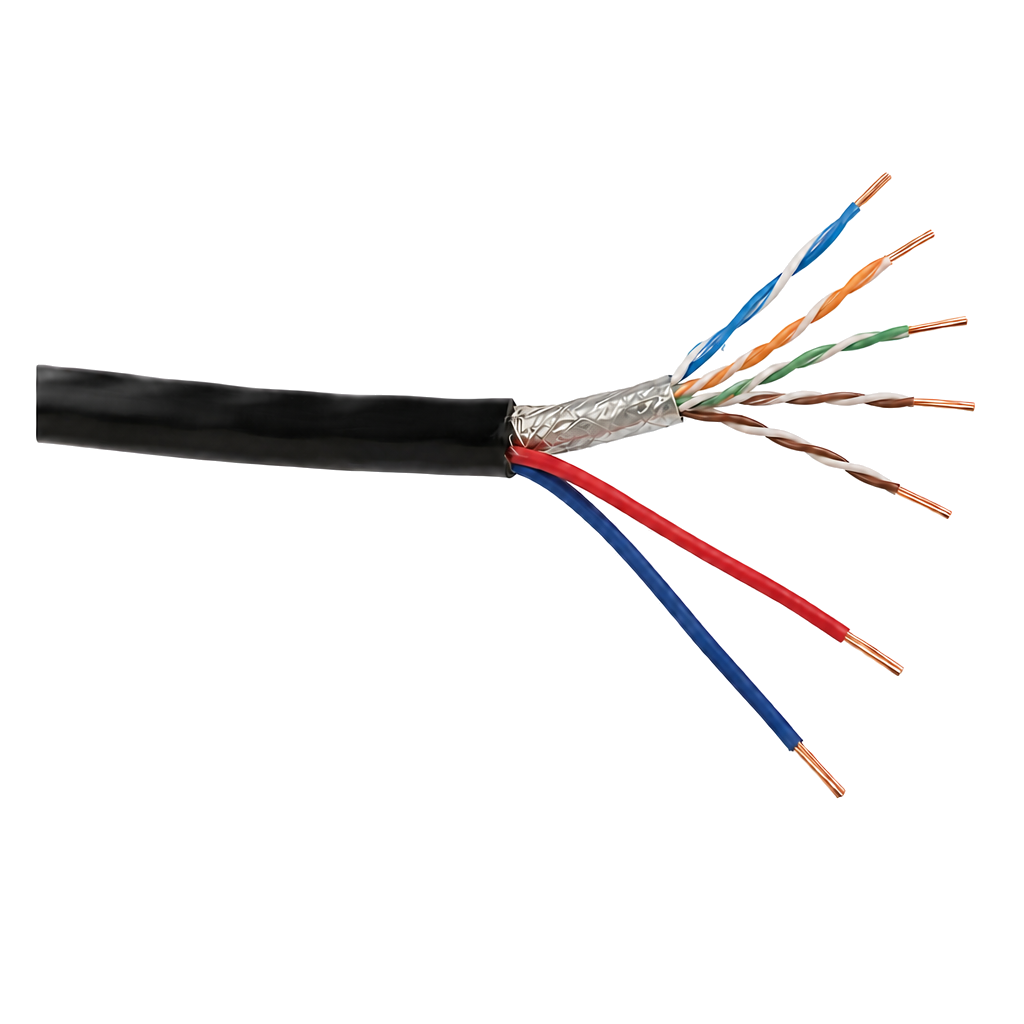
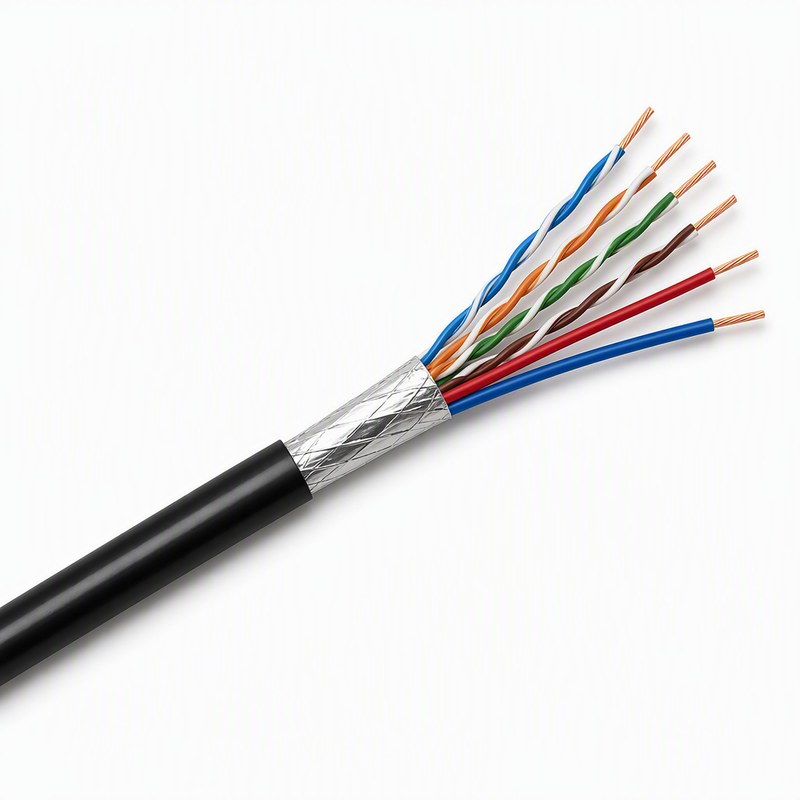
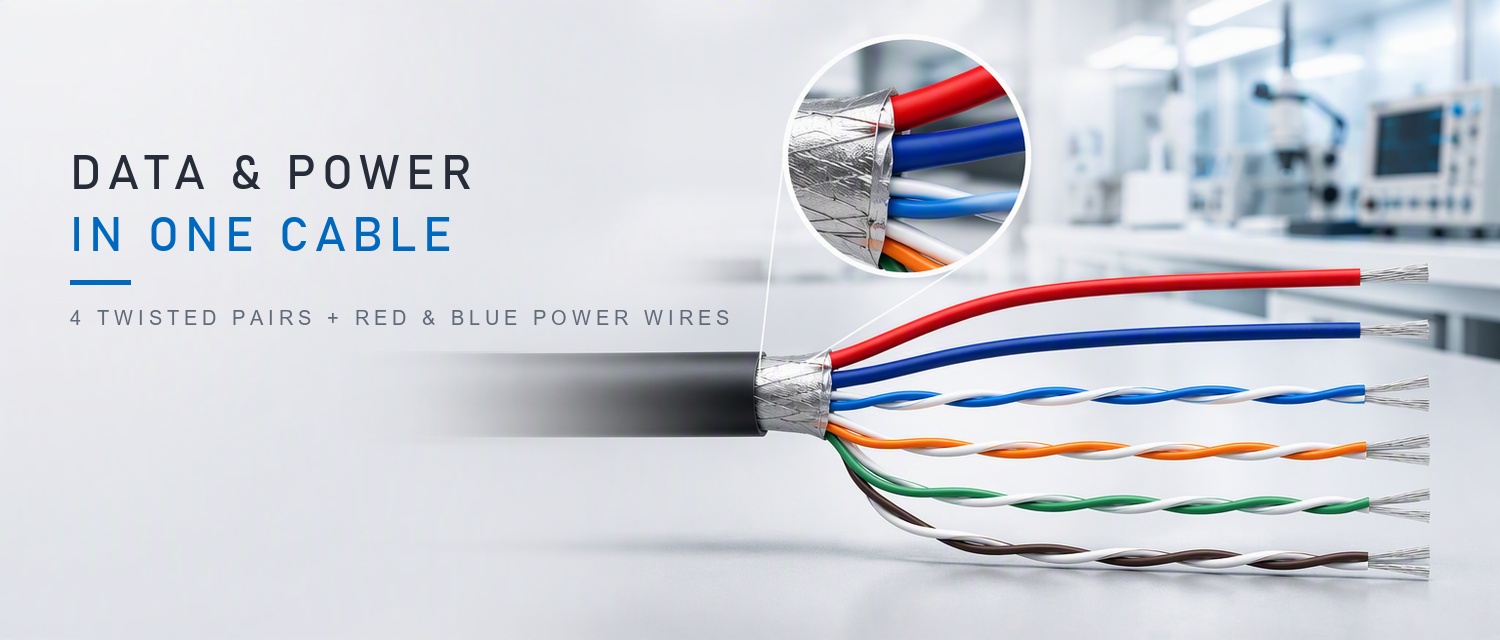
Power & Data combo cable for CCTV systems: four twisted pairs for data and red and blue power wires combined in one sheath, with an aluminum foil shield for clean signal transmission.
Supplier: GAOYUAN
Power & Data combo cable for CCTV systems: four twisted pairs for data and red and blue power wires combined in one sheath, with an aluminum foil shield for clean signal transmission.
Walk onto any CCTV installation and the cabling pattern is always the same: every camera needs two things to work — power to run, and a line for its signal. For years that meant two separate cables: one power run and one data or video run, pulled side by side, secured separately, and terminated twice. Double the cable, double the pulling, double the points where something can go wrong. The Power & Data combo cable addresses this directly. It puts both jobs into one cable — four twisted pairs for data and two red and blue wires for power, wrapped together under an aluminum foil shield inside a single black sheath. One cable, one pull, one neat run to each camera. Purpose-built for CCTV systems, it is the practical answer for installers who wire cameras every day. That is the core value proposition of this cable.
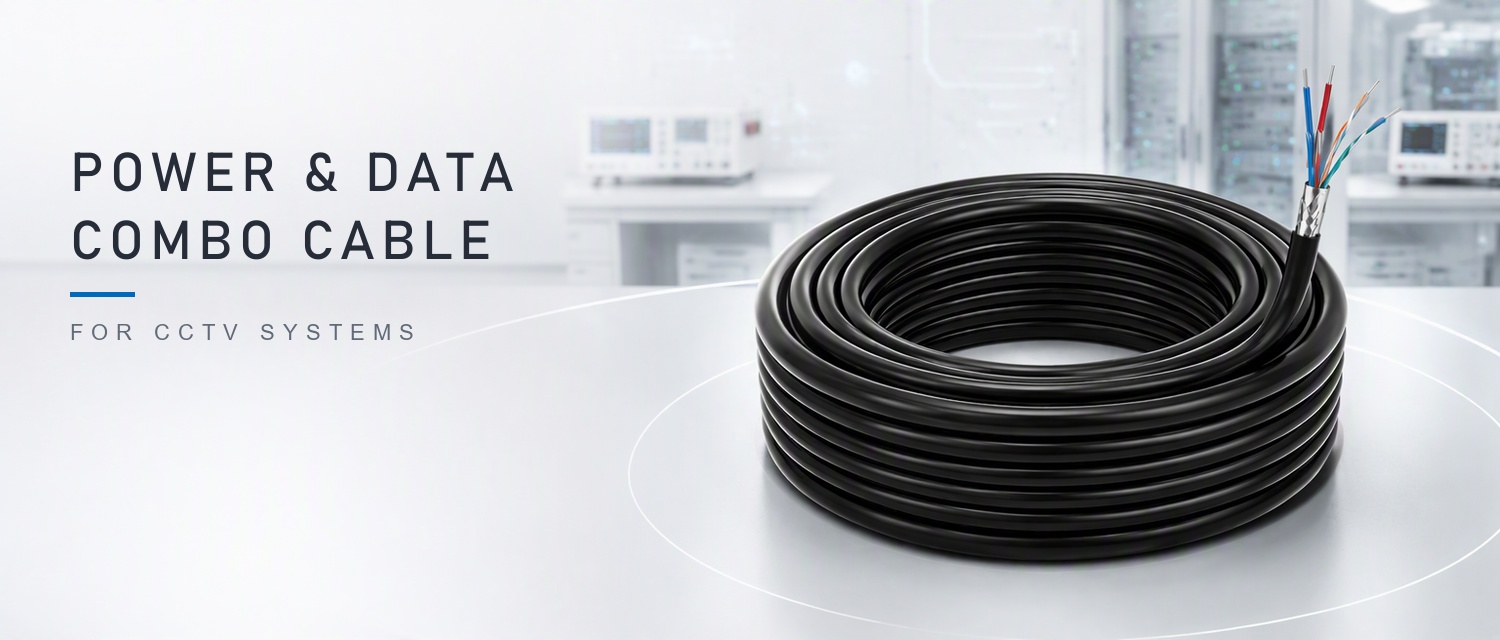
The Power & Data combo cable is a single-run solution for CCTV camera wiring, combining the data path and the power path in one jacket. Its design and specification set are as follows.
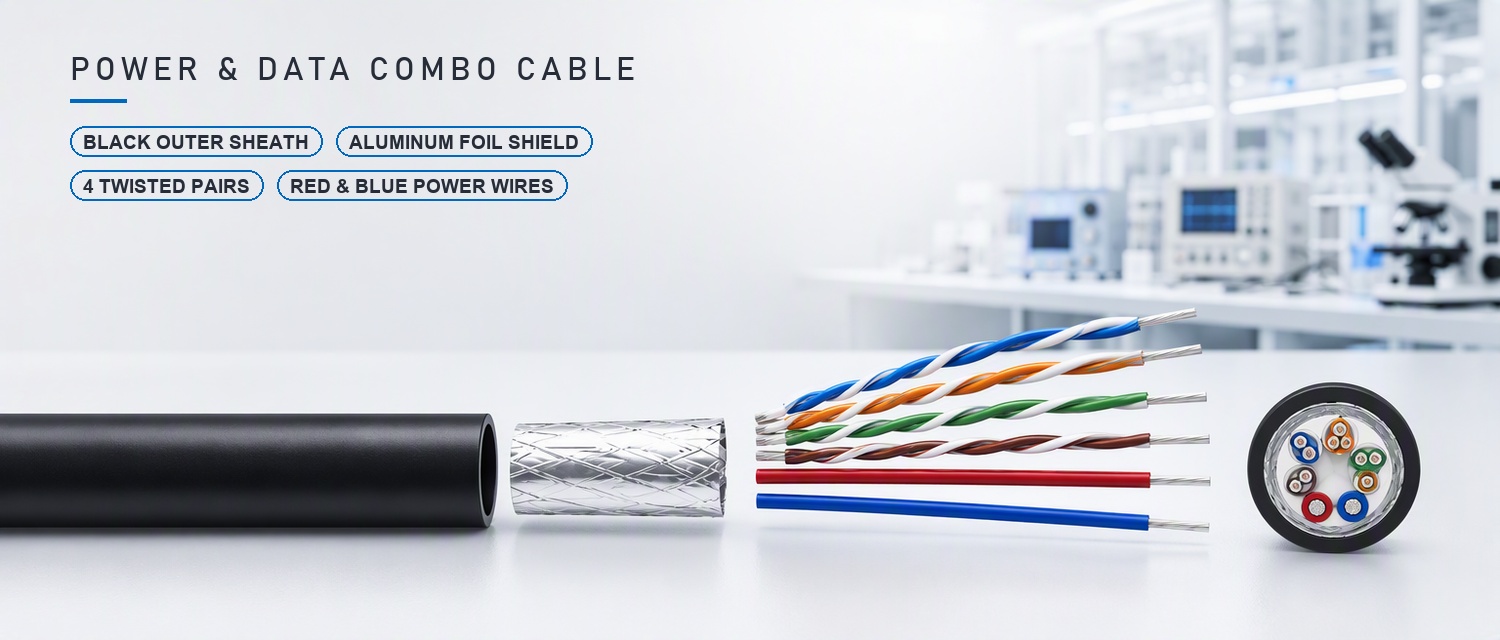
Two jobs in one cable. The cable is built around a simple idea: a camera needs power and it needs data, so carry both in one jacket. Instead of pulling a separate power cable and a separate data cable to every camera, the installer pulls one combo cable — less material on the job, less time in the ceiling or the trench, and one clean point of entry at every camera.
An aluminum foil shield where it matters most. In a combo cable, the data pairs run a few millimeters from the power wires that feed them — exactly the kind of proximity that invites noise. The aluminum foil shield sits between the two worlds, blocking interference so the data path stays clean while the power path does its job. The shield is not an option here; it is what makes the combination work.
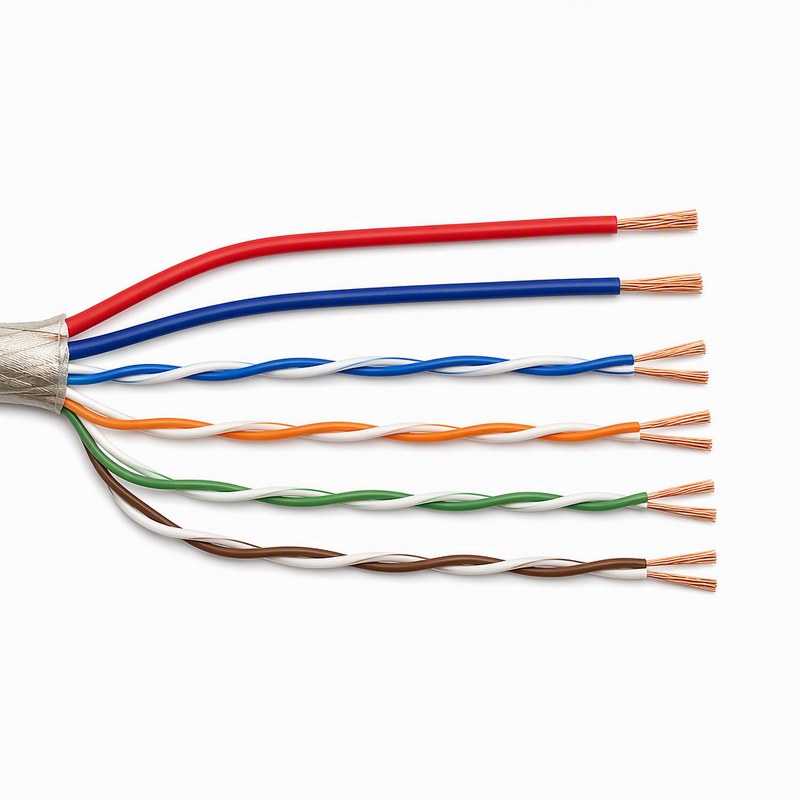
Twisted pairs that protect the signal. Each data pair is twisted in the standard way, and twisting is itself a form of shielding: external noise couples equally into both wires of the pair and cancels out. Four twisted pairs give the cable a ready data path built on the most widely understood data-cable construction in the industry.
A power pair you cannot misidentify. Red and blue are the classic, unmistakable colors for a DC power pair. On site — often in low light, tight spaces, and cable bundles — the installer can identify the power wires at a glance, which cuts termination errors and speeds up every camera hookup.
Built for the CCTV workflow. From the camera location back to the power source and the recorder, the combo cable matches how surveillance systems are actually installed: one run per camera, consistent construction along the whole system, and a single cable type to stock, cut, and terminate.
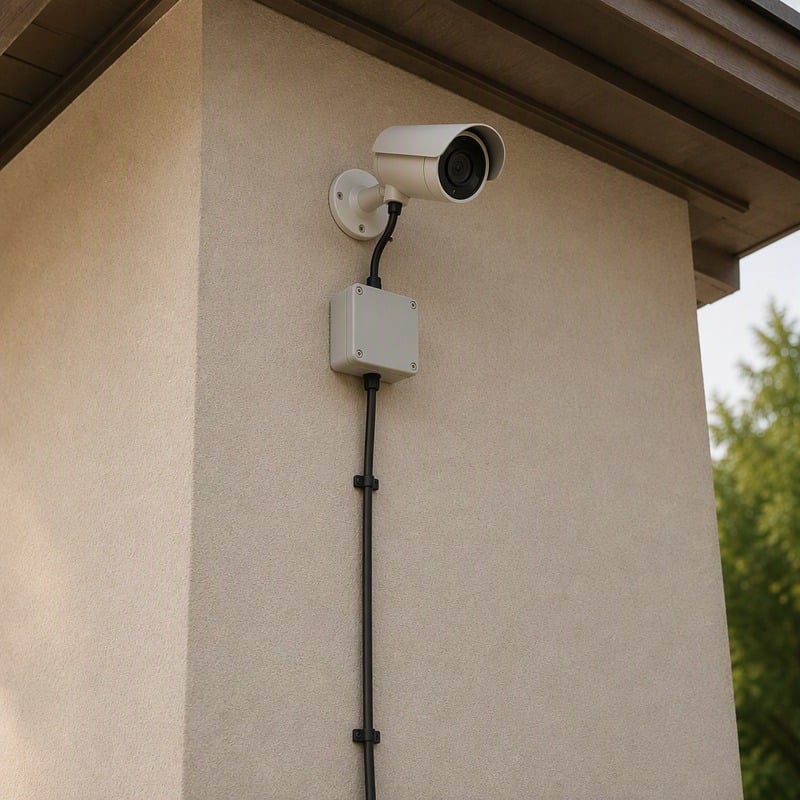
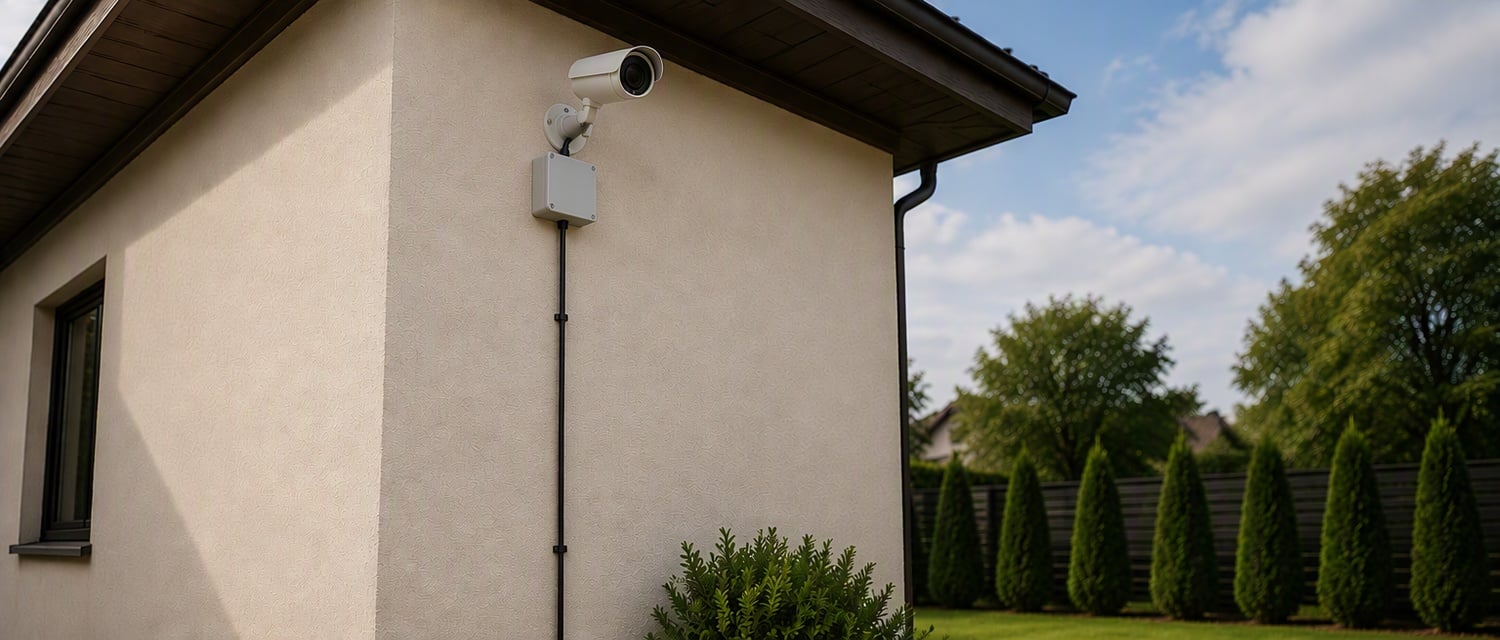
CCTV Camera Power and Data Runs Every CCTV camera needs a supply and a signal line, and the combo cable delivers both in a single run from the camera back toward the source. The red and blue wires feed the camera; the twisted pairs carry its data — one cable doing the job that used to take two.
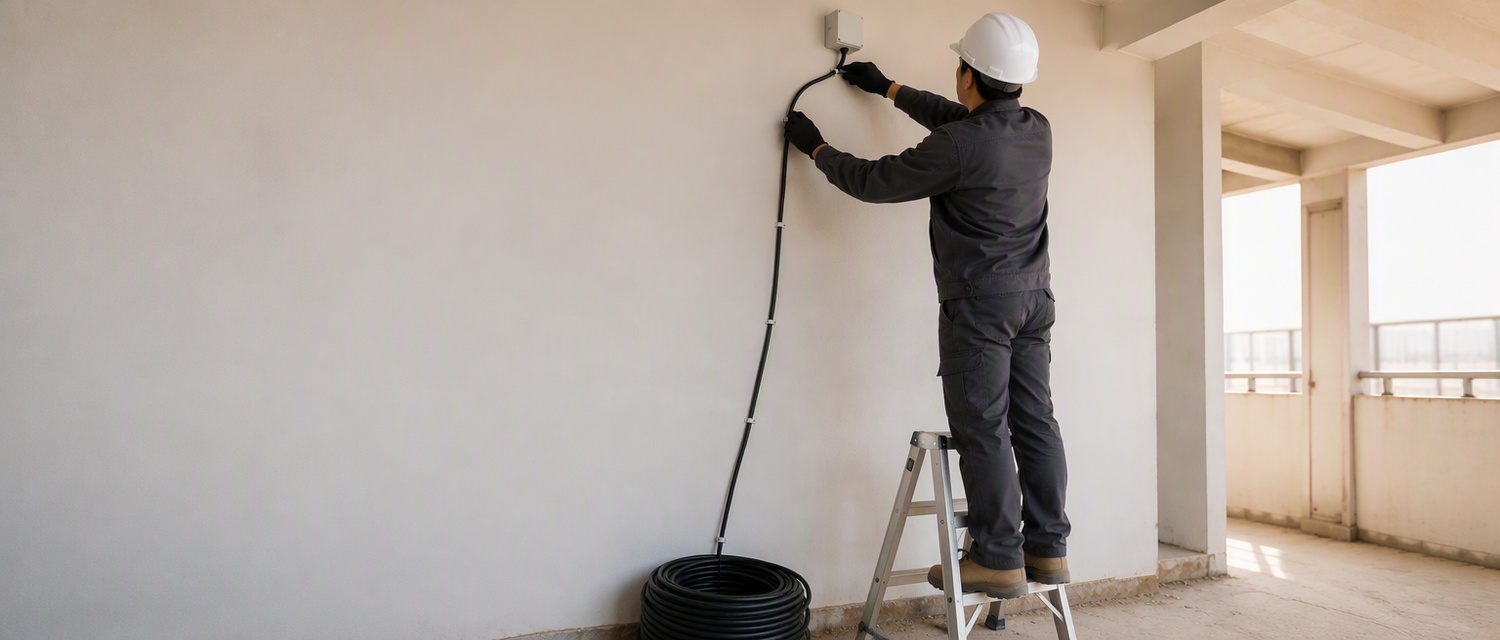
New Installations Built for Speed On a fresh surveillance project, the cable count decides the labor cost. Running one combo cable per camera instead of two separate cables cuts the pulling time, the cable management, and the number of connections — a difference that multiplies across every camera on the job.
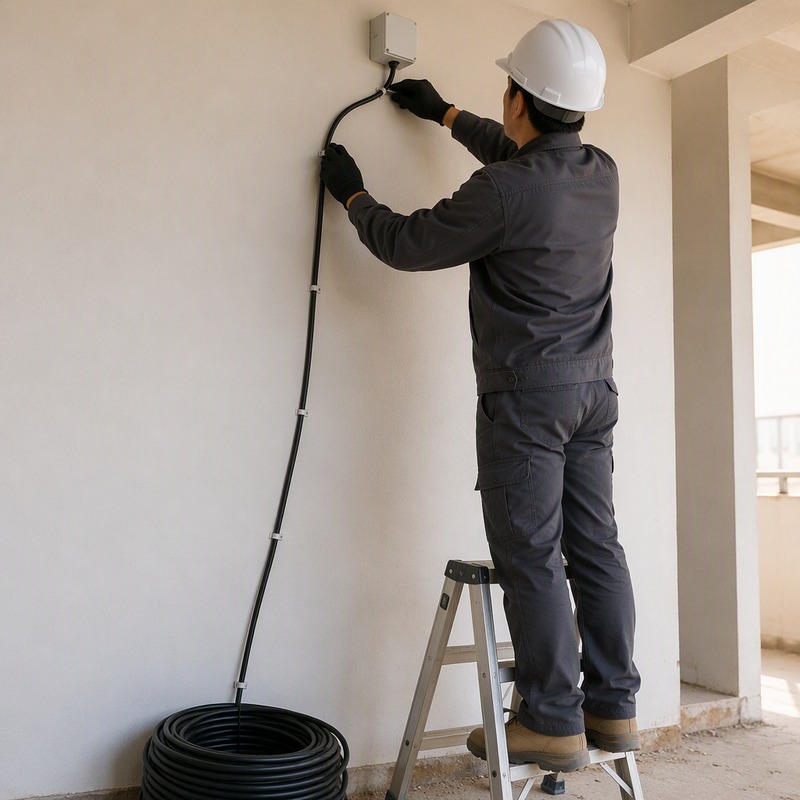
Multi-Camera and Retrofit Wiring Retrofitting a building with CCTV means threading cable through existing walls and ceilings, where every additional cable makes the job harder. The combo cable fits the retrofit reality: half the cables to route, and a slimmer overall bundle through crowded pathways.
Building Security System Cabling Beyond individual cameras, the same cable carries the wiring pattern across the whole security system — from camera points to distribution and control locations — keeping the installation uniform, tidy, and easy to maintain for the life of the system.
Separate cables are not wrong — they are just twice the work. The combo cable exists to consolidate the two runs every camera needs into one, and that consolidation is where the time, the material, and the points of failure are saved.
Install the cable without sharp bends or kinks, and do not crush it with staples or ties — the geometry of the twisted pairs and the integrity of the foil shield both depend on gentle handling. When preparing the ends, strip carefully so the blade does not nick the aluminum foil or the conductor insulation: a damaged shield is damaged noise protection, and a nicked conductor is a future fault. Keep the twist of each pair intact right up to the termination, and identify the red and blue power wires correctly before connecting. Where layout allows, keep the run clear of the strongest interference sources, and store coils in a dry place before installation.
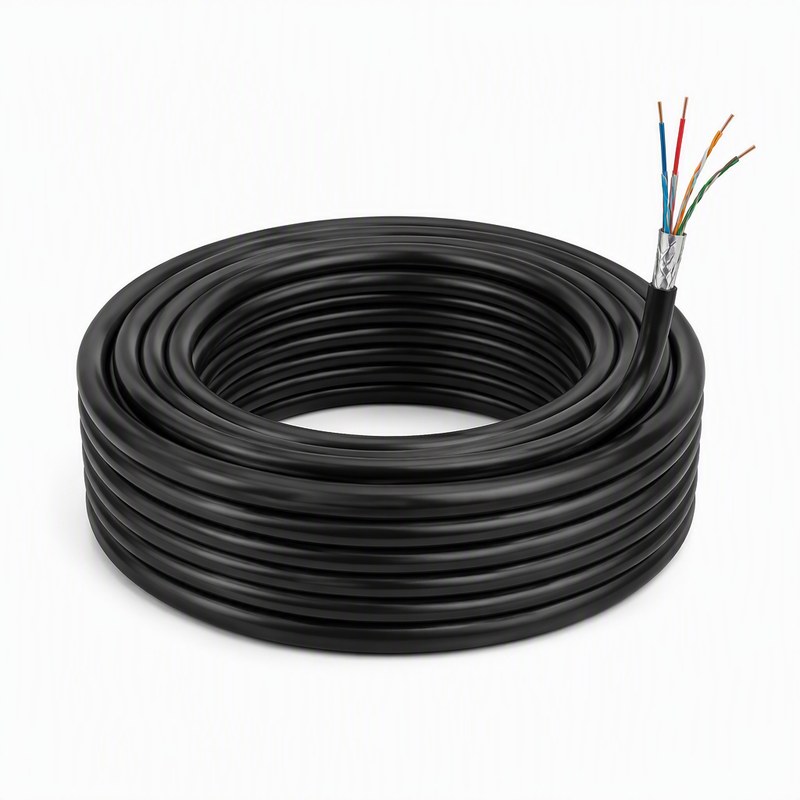
One procurement observation worth noting: on a CCTV project, the cost of cabling is measured in pulls, not meters — every additional cable means another run, another set of terminations, and another place for a fault to hide. A cable that carries power and data together turns two pulls into one, on every camera, across the whole system. This Power & Data combo cable is designed for CCTV systems requiring power and data at each camera location. Always follow the relevant installation standards and safe working practice on site.