How Does Gate Valve Design Affect Sealing Performance and Reliability?
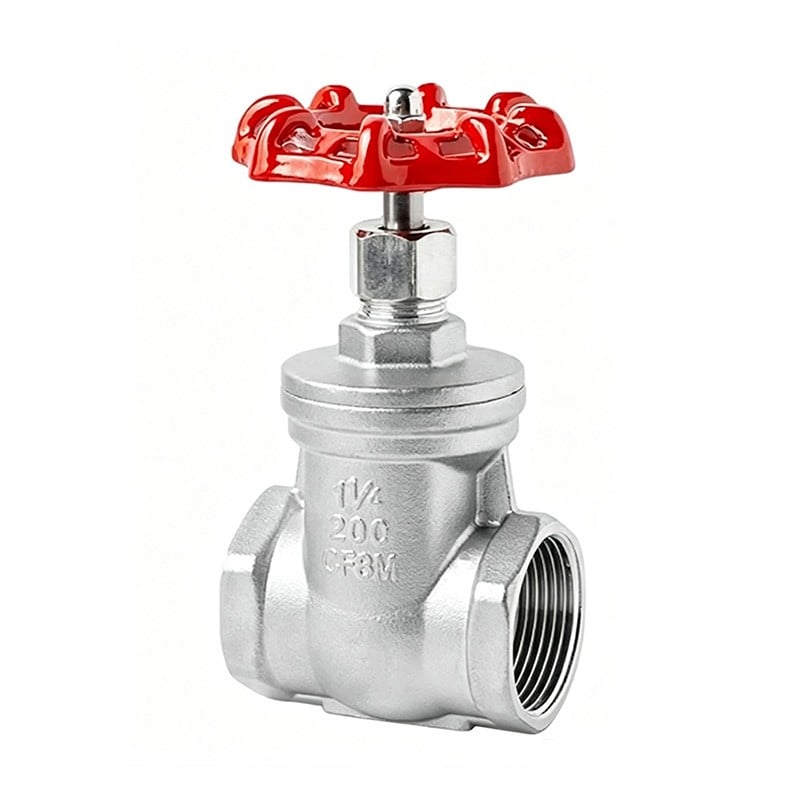
The performance and longevity of any piping system depend fundamentally on the quality and design of its components, and few elements are as critical as the gate valve. A gate valve operates by raising or lowering a flat or wedge-shaped gate to control fluid flow, making its internal geometry and sealing surfaces essential to reliable operation. Understanding how gate valve design affects sealing performance and reliability helps engineers, maintenance professionals, and facility managers make informed decisions about valve selection, installation, and long-term maintenance practices.
Gate Valve Sealing Surface Design and Material Selection
Seat Material Impact on Sealing Integrity
The sealing performance of a gate valve begins with its seat design and the materials selected for the gate and seat surfaces. Traditional designs employ bronze or stainless steel seats paired with a matching gate material, creating a metal-to-metal seal. Modern gate valve designs often incorporate soft-seated options using elastomeric materials like PTFE or other polymers that conform to surface irregularities and create a more forgiving seal. The choice between hard-seated and soft-seated designs directly affects pressure retention, temperature tolerance, and maintenance frequency. Hard-seated gate valve configurations tolerate higher temperatures and abrasive media but may require more frequent maintenance to restore leak-free performance. Soft-seated designs excel in applications demanding bubble-tight shutoff but degrade when exposed to extreme heat or sharp particulates.
Gate Geometry and Wedge Angle Optimization
The gate valve's internal geometry, particularly the wedge angle and gate face profile, profoundly influences how evenly pressure distributes across the sealing surfaces. A parallel gate distributes sealing force uniformly across both seats, while a wedge gate concentrates force at the narrowest point, reducing the total contact area but increasing local pressure. This design variation affects reliability under thermal cycling, where material expansion and contraction stress the seal. Gate valve designs incorporating gradual wedge angles minimize binding and uneven wear, extending seal life and maintaining consistent shutoff performance across operating cycles. The precision manufacturing of these surfaces ensures flatness and smoothness, preventing microscopic leak paths that would otherwise develop under sustained pressure.
Installation Practices and Sealing Performance
Orientation and Support Requirements
Proper gate valve installation guide principles directly impact long-term sealing reliability. The gate valve must be installed in the correct orientation, with the bonnet or stem pointing upward as a standard safety practice and to ensure proper drainage of any accumulated condensation. The installation location must provide adequate support to prevent stress on flanged connections, which can warp the sealing surfaces and introduce leaks. Gate valve installation guide specifications also recommend isolation blocks or pipe supports within 12 inches of the valve on either side to minimize vibration transmission. Vibration accelerates wear on the gate and seats, degrading sealing performance over months or years of continuous operation. Proper support and orientation establish a foundation for reliable sealing throughout the valve's service life.
Pressure Testing and Initial Commissioning
After installation, a gate valve must undergo pressure testing to verify sealing integrity before the system enters normal operation. Hydrostatic pressure tests confirm that the gate valve seats properly and that no leaks develop across the sealing surfaces under rated pressure. This initial commissioning reveals installation defects, manufacturing flaws, or damage sustained during transportation. Many leaks that emerge during the first weeks of operation stem from improperly seated gates or foreign material trapped on the sealing surfaces during assembly. The gate valve installation guide recommends gentle opening and closing cycles during initial operation to ensure the gate and seats mate cleanly and to flush any debris that may have accumulated inside the valve body.
Maintenance, Repair Strategies, and Reliability Over Time
Preventive Maintenance for Sustained Sealing Performance
Gate valve maintenance and repair practices determine how long a valve retains acceptable sealing performance. Regular inspection protocols establish baseline performance data and identify early warning signs of seal degradation, such as external weeping around the stem or reduced shutoff precision. Routine gate valve maintenance and repair involves exercising the valve monthly or quarterly by opening and closing it fully to prevent gate stiction, where minerals or corrosion lock the gate in one position. This simple practice disrupts buildup on the sealing surfaces and confirms the valve remains operable when an emergency closure is required. For critical applications, valve condition monitoring using ultrasonic or thermal imaging techniques detects leakage that would otherwise go unnoticed until system pressure drops measurably.
Seat and Gate Refurbishment When Performance Degrades
When a gate valve begins to weep or fails to close completely, gate valve maintenance and repair may involve refurbishing internal components rather than replacing the entire valve. Professional service providers can lap the gate and seat surfaces to restore microscopic flatness and smoothness, eliminating the leak path. This refurbishment extends valve life at a fraction of replacement cost and maintains system integrity without downtime for procurement and installation. The decision to repair or replace depends on the valve's historical performance, the cost of replacement components, and the criticality of the application. High-reliability systems often reserve spare refurbished gate valve assemblies on-site, enabling rapid replacement when performance degrades below acceptable thresholds.
Comparison of Gate Valve Performance Against Ball Valve Alternatives
Sealing Mechanism Differences and Application Suitability
When evaluating ball valve vs gate valve options for a specific application, the sealing mechanism represents the primary technical distinction. A ball valve uses a spherical element with a single port opening that rotates 90 degrees to control flow, providing faster shutoff and requiring less manual effort than a gate valve. The ball valve vs gate valve comparison favors ball valves for on-off applications with frequent cycling because the quarter-turn mechanism minimizes wear compared to the linear gate motion in gate valve designs. However, ball valve vs gate valve analysis reveals that gate valves excel in applications requiring precise throttling or where system pressure may spike unexpectedly, because the gate's linear motion allows smoother flow control and the dual-seat sealing surfaces handle pressure spikes more gracefully than a ball valve's single contact point.
Temperature, Pressure, and Media Compatibility
The ball valve vs gate valve decision also hinges on environmental conditions and fluid characteristics. Gate valves typically tolerate higher temperatures than ball valves because metal-to-metal sealing surfaces remain stable under thermal stress, whereas soft elastomeric seals inside ball valves degrade when exposed to sustained heat above 200 degrees Celsius. The gate valve design accommodates higher pressure ratings more readily, with seat geometry distributing force evenly across large contact areas. Ball valve vs gate valve comparisons for abrasive slurries or applications with entrained solids often favor gate valve designs, because the flat sealing surfaces can be lapped smooth to minimize particle entrapment, whereas the spherical ball creates recesses where solids accumulate and erode the seal.
FAQ
How does the gate valve design prevent internal leakage across the seats?
The gate valve's sealing performance depends on the gate making precise contact with two stationary seats. The gate surface must be perfectly flat, and the seat faces must be equally smooth and parallel to eliminate microscopic gaps where fluid could escape. Hard-seated gate valve designs use metal-to-metal contact under spring or system pressure to maintain seal force, while soft-seated designs employ elastomeric inserts that conform to seat irregularities. Modern gate valve manufacturing employs precision lapping and polishing to achieve surface finishes below 10 microinches, ensuring leak-free shutoff under rated pressure conditions.
What role does gate valve maintenance and repair play in preventing costly system failures?
Gate valve maintenance and repair prevents minor issues from escalating into catastrophic failures. Regular exercise of the valve prevents gate stiction and allows early detection of seal degradation. When weeping or reduced shutoff precision appears, gate valve maintenance and repair through seat lapping or component replacement restores performance before pressure loss or environmental contamination occurs. Proactive maintenance extends valve service life, maintains system safety margins, and avoids unplanned downtime that can cost far more than preventive service.
Why might engineers choose a gate valve over a ball valve in high-temperature applications?
Engineers conducting ball valve vs gate valve analysis for high-temperature service often select the gate valve because metal-to-metal sealing surfaces remain thermally stable above 250 degrees Celsius, whereas ball valves rely on elastomeric seals that soften or harden under extreme heat. The gate valve design also accommodates thermal expansion more readily, because the linear gate motion accommodates dimensional changes in the valve body. For applications exceeding 300 degrees Celsius, the ball valve vs gate valve comparison strongly favors gate valve construction due to superior material compatibility and predictable sealing performance across wide temperature ranges.