Supplier:Jinghan
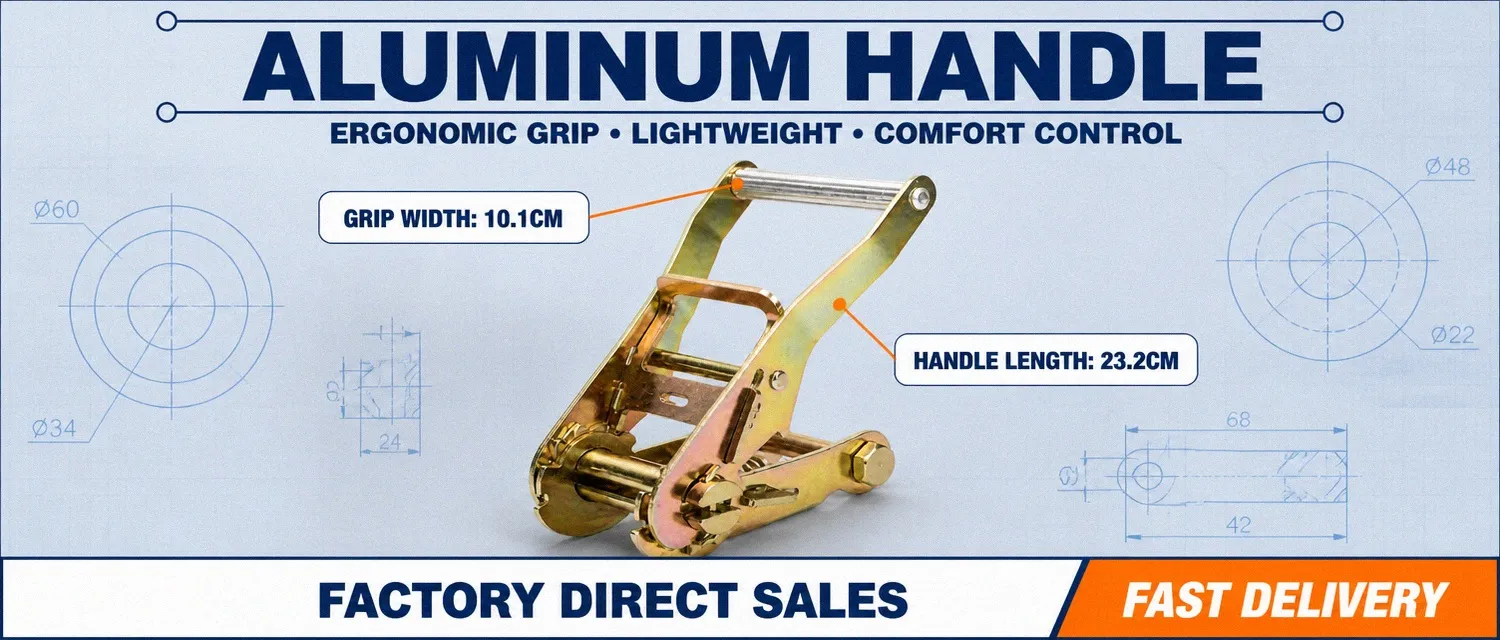
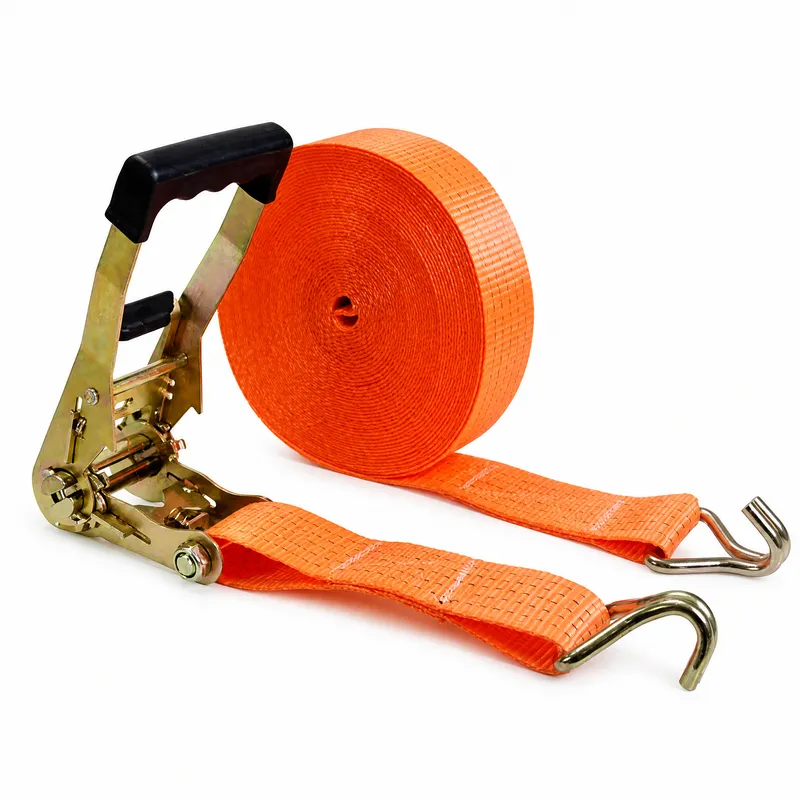
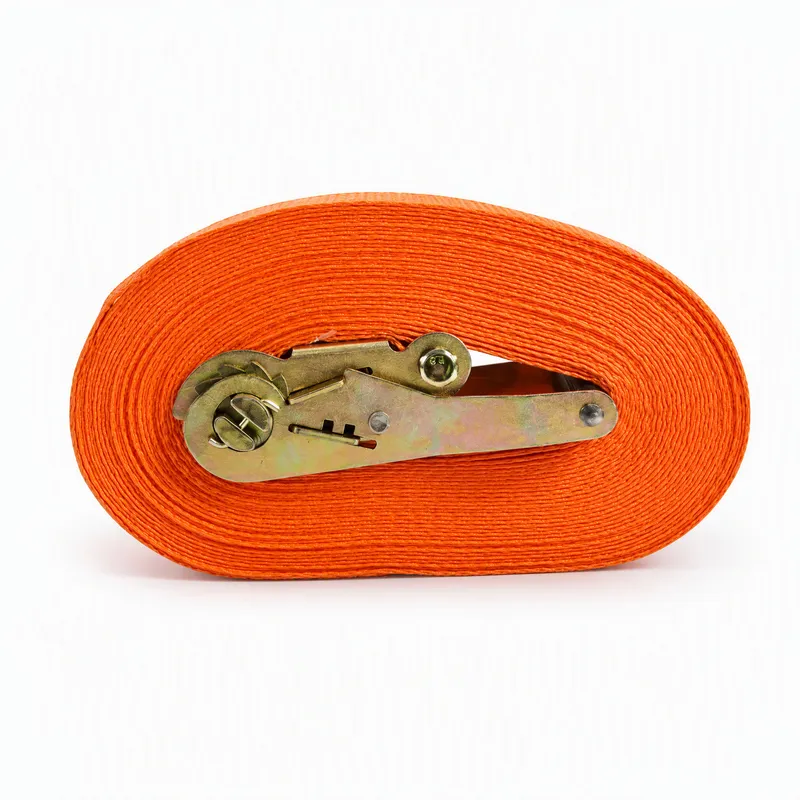
Ratchet tie-down with polyester webbing, aluminum handle, and self-locking mechanism, for securing cargo and adjusting tension, anti-loosening.
Supplier:Jinghan
Ratchet tie-down with polyester webbing, aluminum handle, and self-locking mechanism, for securing cargo and adjusting tension, anti-loosening.
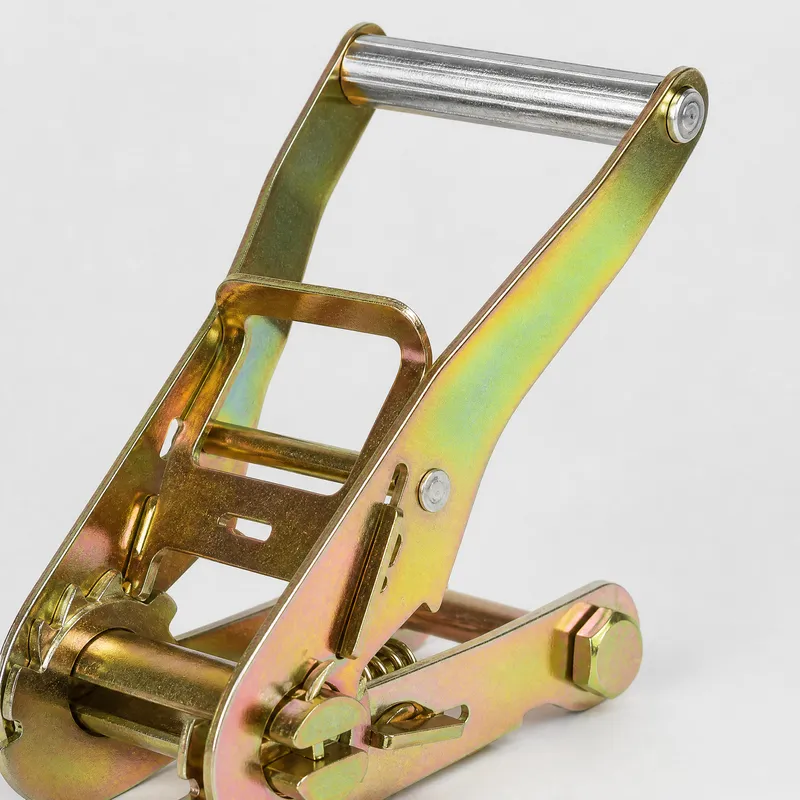
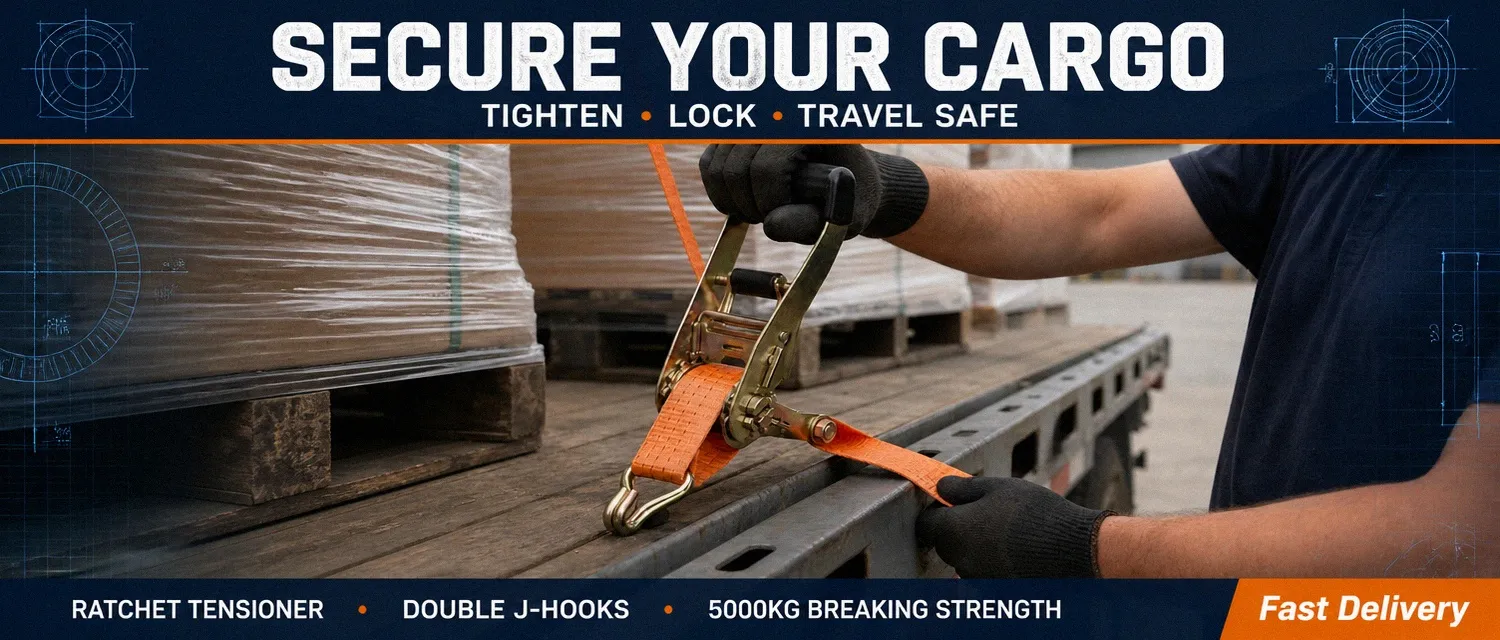
A ratchet strap tensioner is a mechanical cargo lashing device that combines high-strength webbing with a ratchet-and-pawl self-locking system. For procurement managers evaluating lashing hardware, the baseline question is simple: does it hold under real transport conditions, and does it hold without needing a specialist to operate it? The answer from a ratchet strap tensioner is straightforward — once tensioned, the anti-return pawl locks the webbing in position, and it stays there until the operator deliberately presses the release latch. No knots, no re-tightening mid-route, no vibration-induced slippage. The ergonomic aluminum-alloy handle makes one-person operation the standard, not the exception.
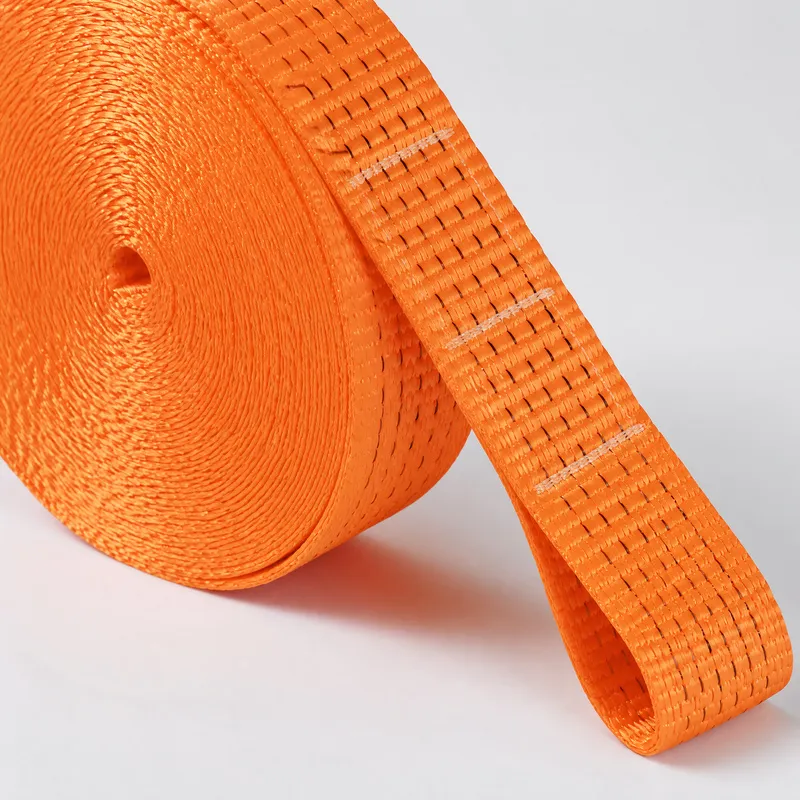
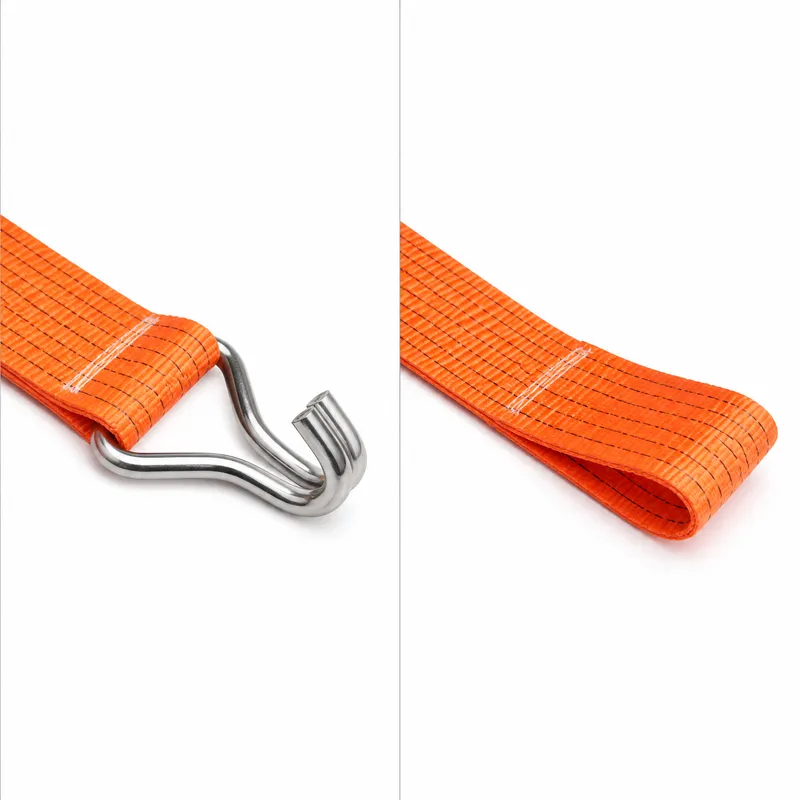
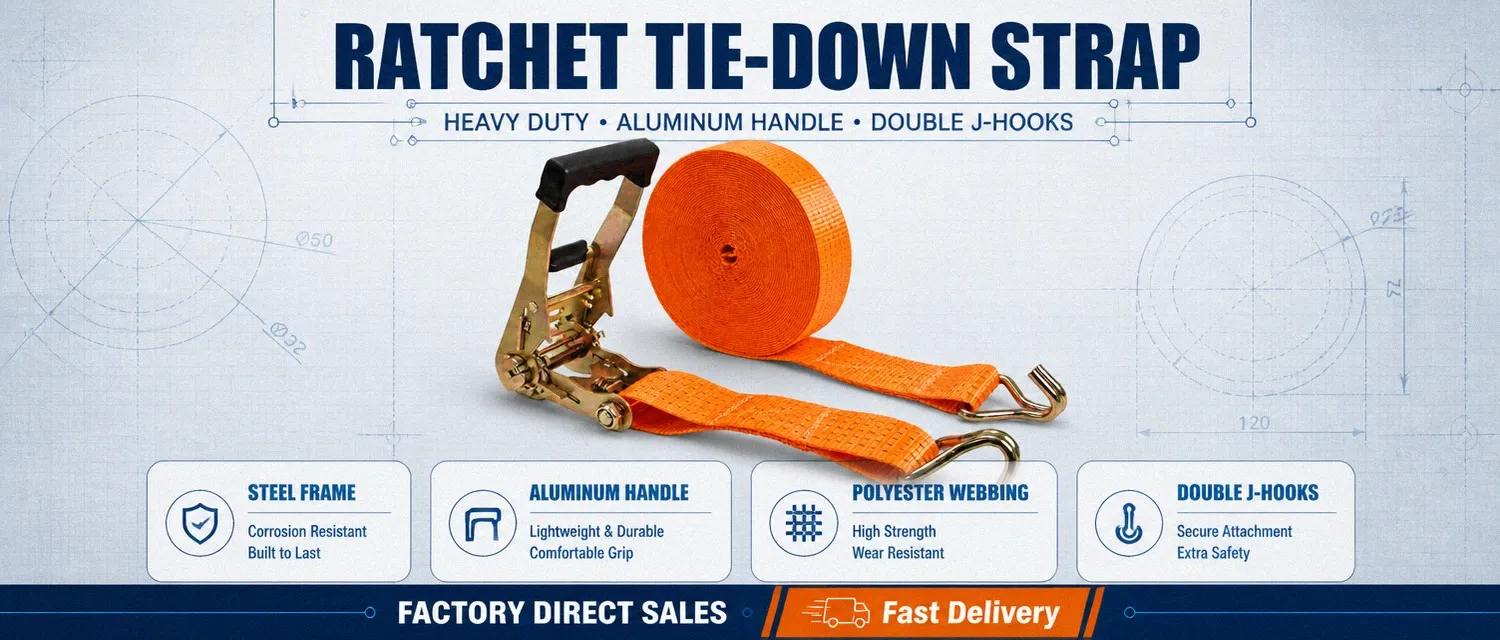
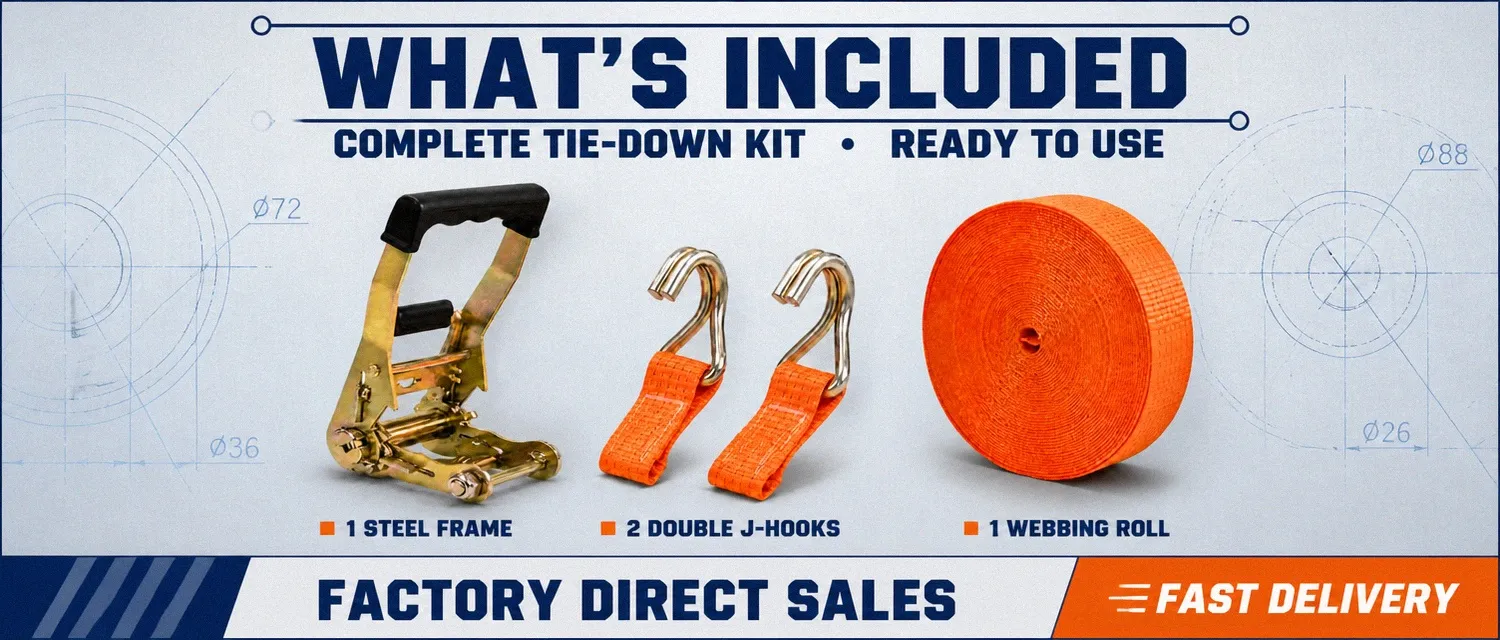
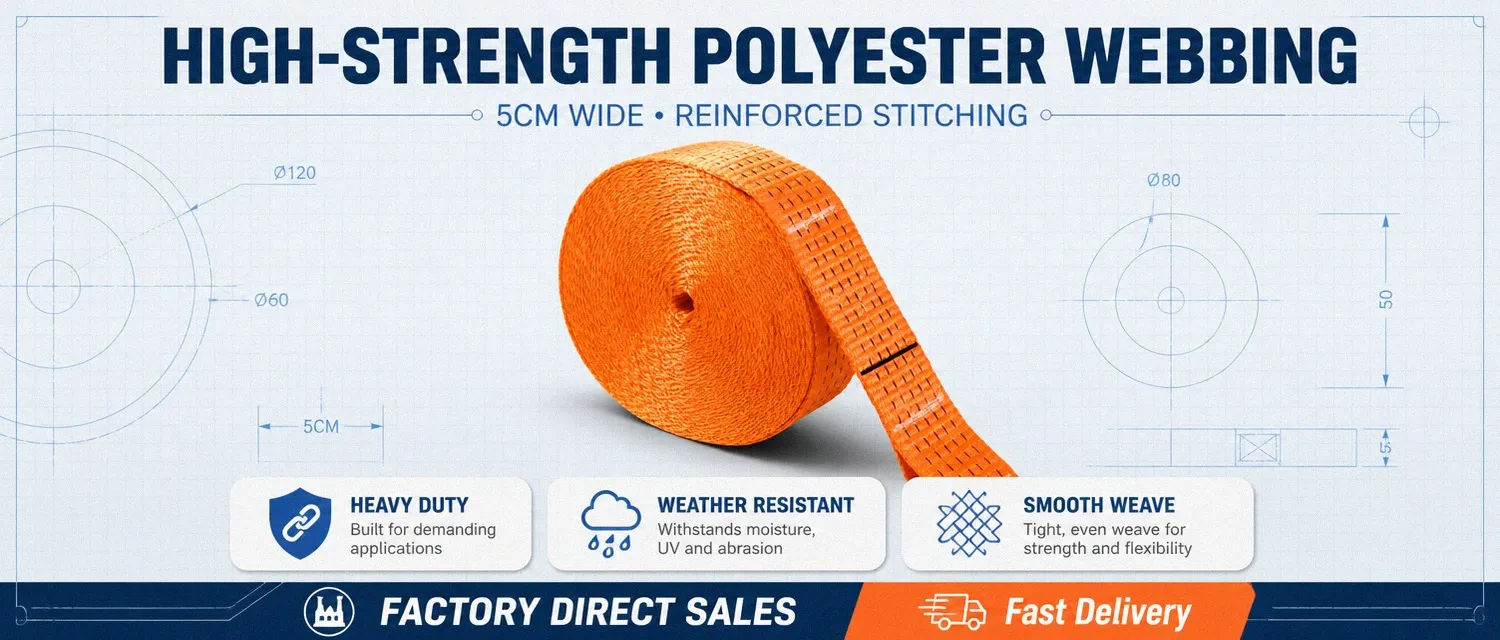
Webbing options include polyester fiber, nylon, and polypropylene, each with low water absorption and broad temperature range compatibility. Load-bearing components — rotating shafts and hooks — use heat-treated carbon steel as standard. Grade 304 stainless steel is available for maritime, coastal, or chemically aggressive environments. Rubber-sleeved hooks are offered on select models to protect cargo surfaces during lashing. Webbing widths cover standard sizes, with custom lengths available for project-specific requirements.
The ratchet strap tensioner locks through tooth-position engagement between the ratchet wheel and anti-return pawl. Each forward handle stroke advances tension and clicks into a new locked position. The release requires a deliberate press of the latch — it will not release accidentally under load or vibration. In practice, this means one operator handles the complete lashing cycle, and the same operator releases it on delivery, without assistance or specialized skill. The audible click at each engagement step provides direct confirmation of locking status rather than requiring visual inspection.
Rope lashings lose tension progressively as vibration works fibers against knots. Non-ratchet straps depend on initial manual pull, which varies by operator and declines over time. A ratchet strap tensioner holds preset tension continuously — the ratchet holds position regardless of road conditions or cargo movement. For freight teams completing long-distance hauls or multi-stop routes, this means inspecting for cargo shift happens at a destination, not every 100 kilometers.
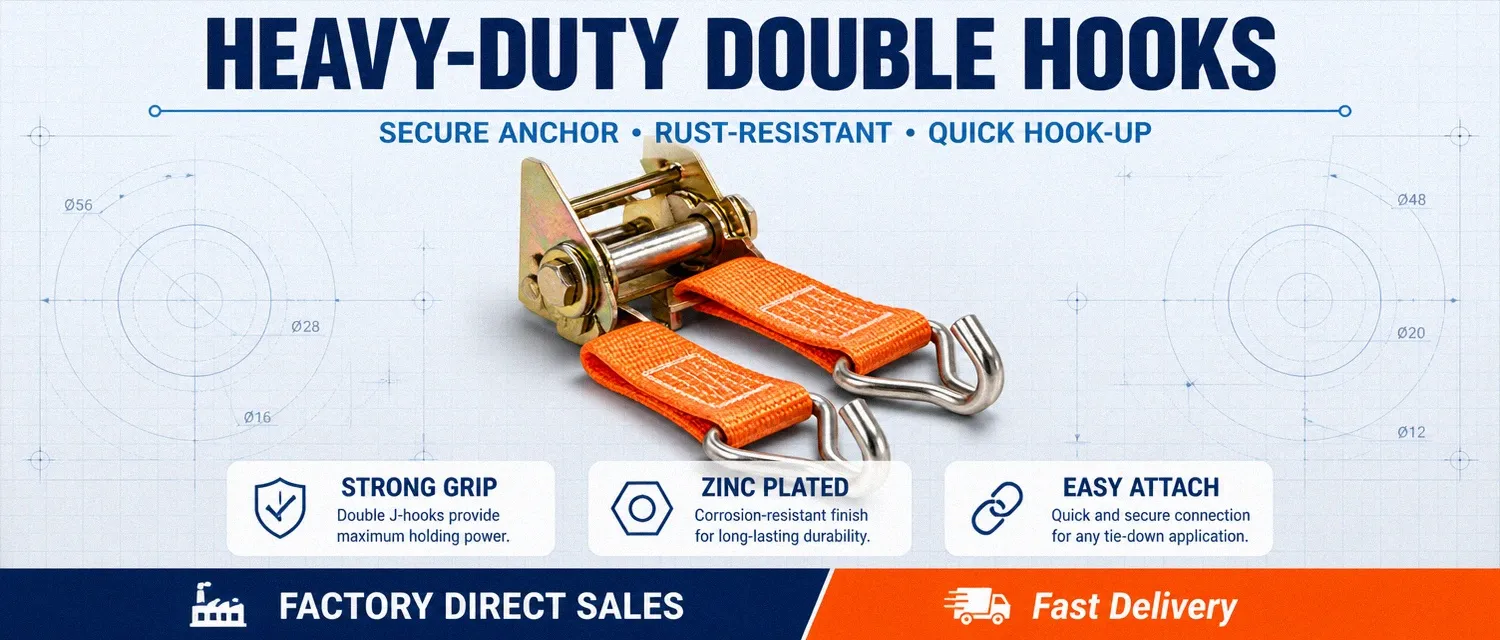
Soft polyester or nylon webbing distributes load without edge concentration. On models with rubber-sleeved hooks, metal hardware never contacts cargo directly. This matters in practice when lashing machinery with painted surfaces, furniture being delivered to customers, or equipment on rental inventory where scratch damage triggers financial disputes. Selecting a ratchet strap tensioner with sleeved hooks is a straightforward way to prevent a common post-delivery problem before it starts.
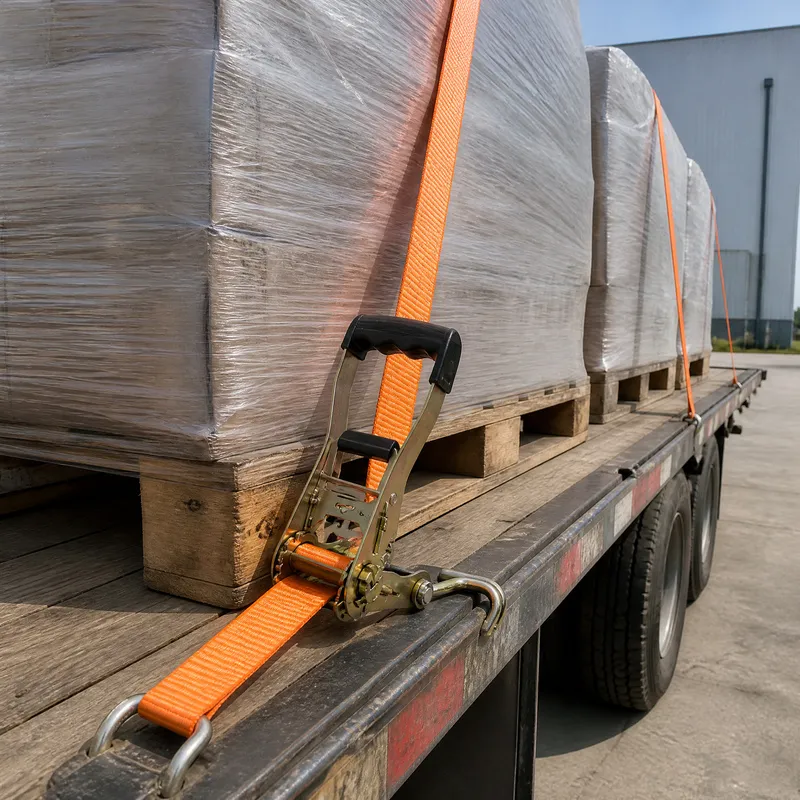
In logistics operations securing palletized goods, machinery crates, or oversized equipment on flatbed trucks and container floors, the ratchet strap tensioner is the standard configuration. Rope lashings require knot-tying skill and periodic re-tightening. Non-ratchet straps lose tension after the initial application. A ratchet system locks in and holds, which reduces cargo damage claims — a cost that accumulates quickly in high-volume freight operations.
Temporary fixing during equipment relocation, conveyor belt adjustment, and structural frame erection all benefit from adjustable, releasable tension. A ratchet strap tensioner deploys in seconds, holds reliably while work proceeds, and releases without tools. Construction and factory maintenance teams typically use multiple units across a shift — lightweight aluminum handles and compact storage make this practical rather than burdensome.
Motorcycles, ATVs, and furniture on transport trailers all need securing. For civil operators, the ratchet strap tensioner's single-operator release — one person, one latch press — is the practical differentiator against rope or strap alternatives that may require two people to safely release under load.
Procurement teams managing lashing consumables sometimes encounter a familiar pattern: budget-priced non-ratchet straps or rope lashings reduce unit cost at purchase, but the total picture over 6 to 12 months includes cargo damage claims, consumable replacement frequency, and the labor cost of re-lashing. A ratchet strap tensioner from a reliable supplier typically changes that calculation. The mechanism holds without re-tightening. The webbing and hardware are reusable across many cycles. Standardizing on one webbing width across a fleet also reduces on-site inventory complexity — fewer variants to track, fewer mismatches at the loading dock.
For cross-border procurement, verifying build quality before committing to volume is standard practice. Sample confirmation service is available before bulk orders, allowing physical verification of webbing weight, hardware quality, and hook fit. For teams working to Chinese suppliers for the first time, bilingual inquiry and technical coordination reduces the risk of specification mismatches reaching the order stage.
Compared with rope lashing, the ratchet strap tensioner generally delivers better anti-loosening performance with lower operator skill requirements. Compared with non-ratchet straps, the ratchet mechanism outputs greater and more stable tensioning force. Stainless steel variants address corrosion in environments where carbon steel would fail prematurely. Heat-treated components in the load path outperform standard electroplated parts in fatigue resistance under repeated high-load cycles.
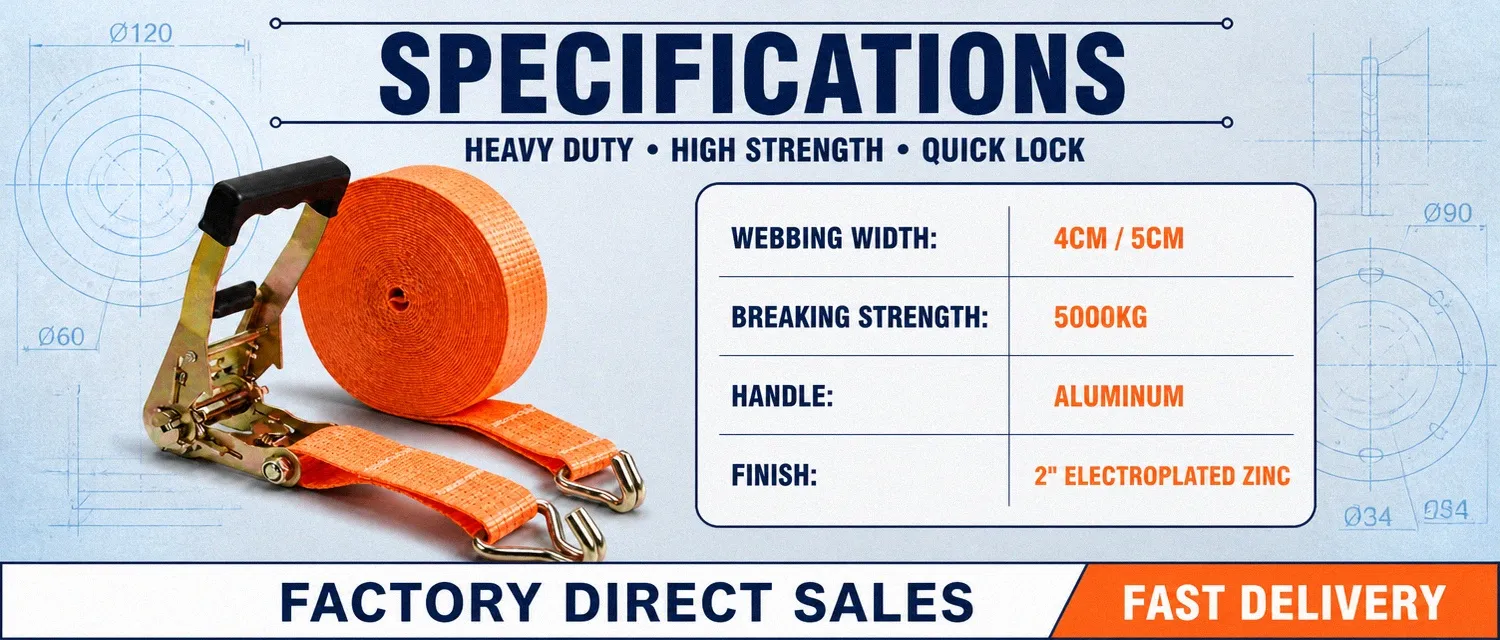
| Component | Specification |
|---|---|
| Webbing | Polyester / Nylon / Polypropylene (low water absorption) |
| Handle | Aluminum alloy, ergonomic curved profile |
| Metal parts | Heat-treated carbon steel; Grade 304 SS optional |
| Locking | Ratchet-and-anti-return-pawl, audible click feedback |
| Release | Press release latch; swing handle to tension |
| Hook option | Rubber protective sleeves (model-dependent) |
| Environments | Open-air transport, warehouse, UV-exposed conditions |
Multiple standard sizes are in ready stock. Custom webbing lengths and hook accessories are available. Product drawings, material performance reports, and specification sheets accompany orders for engineering and quality verification needs. Long-distance shipments use moisture-resistant, friction-proof packaging to protect against sea freight conditions. Volume and project orders are eligible for negotiated pricing; pre-sales consultation covers application-specific selection based on load requirements and working environment.