
Supplier:Juxing
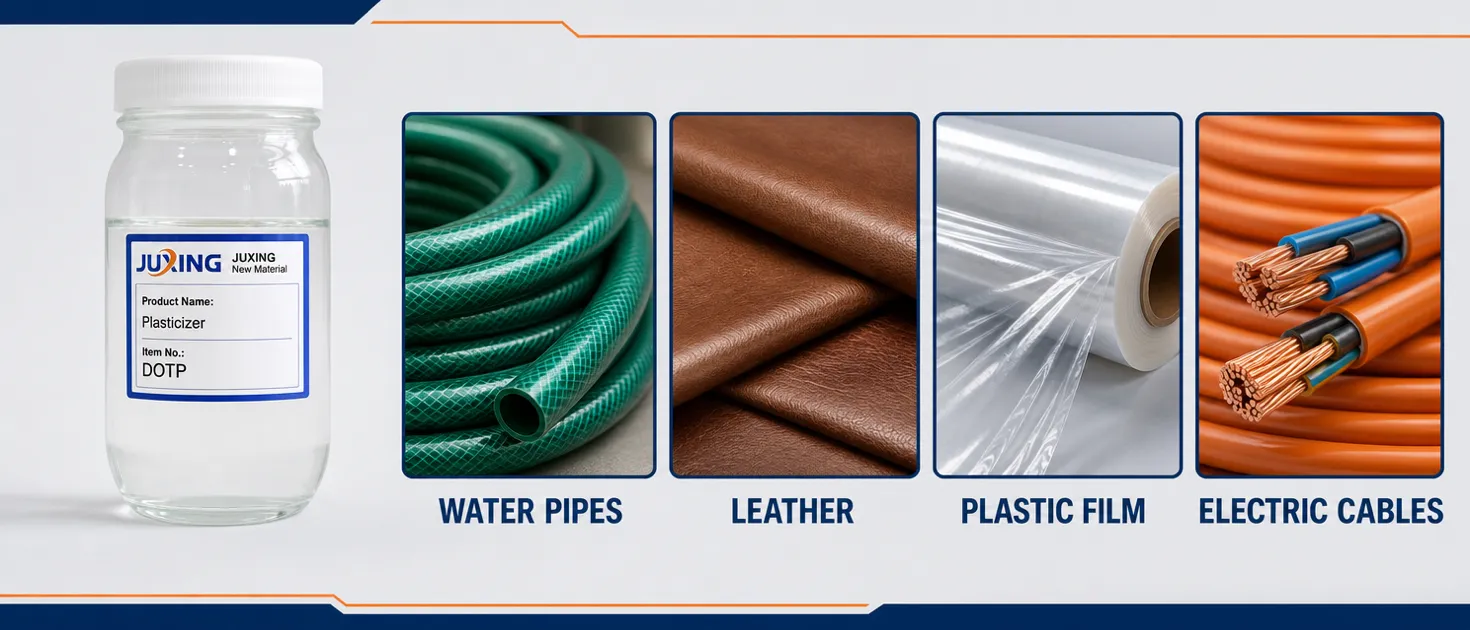
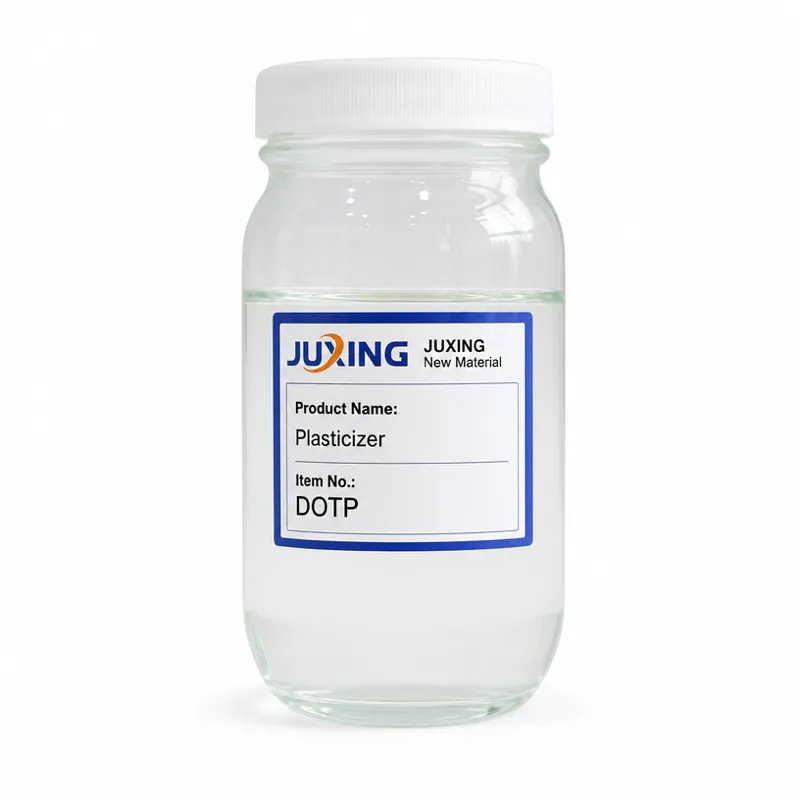
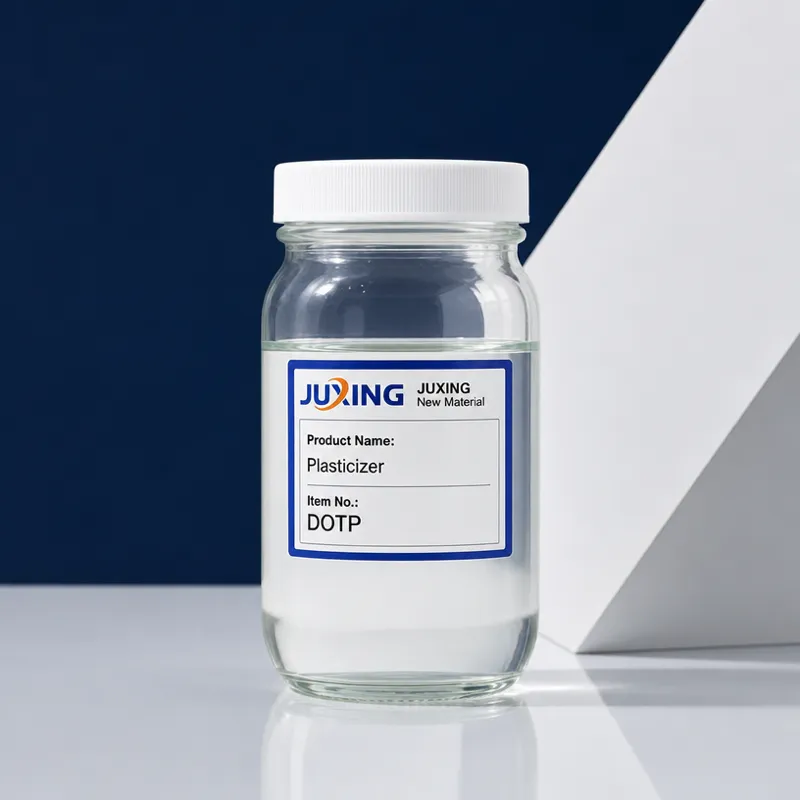
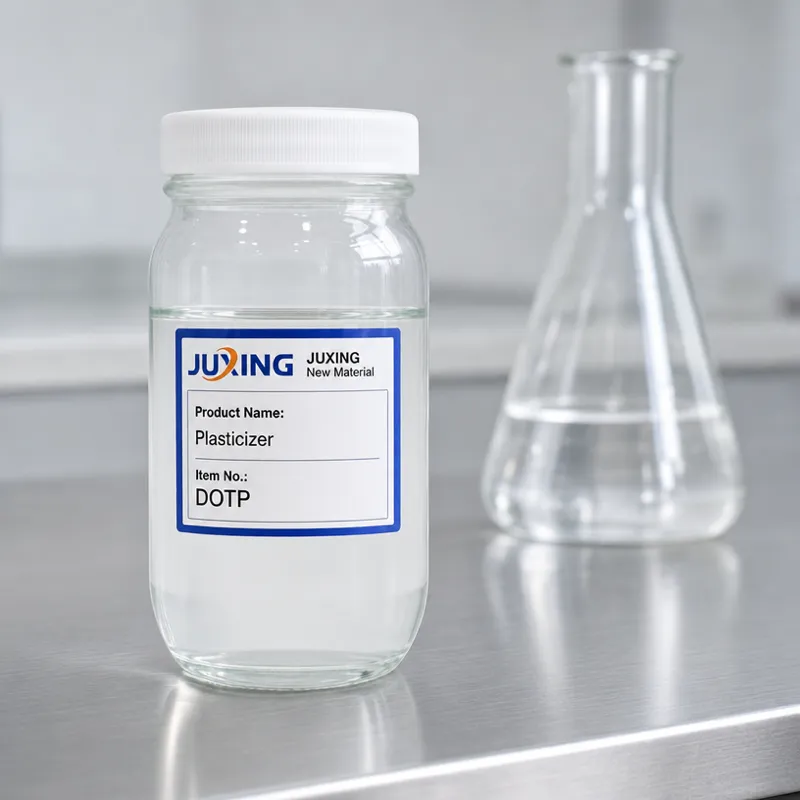
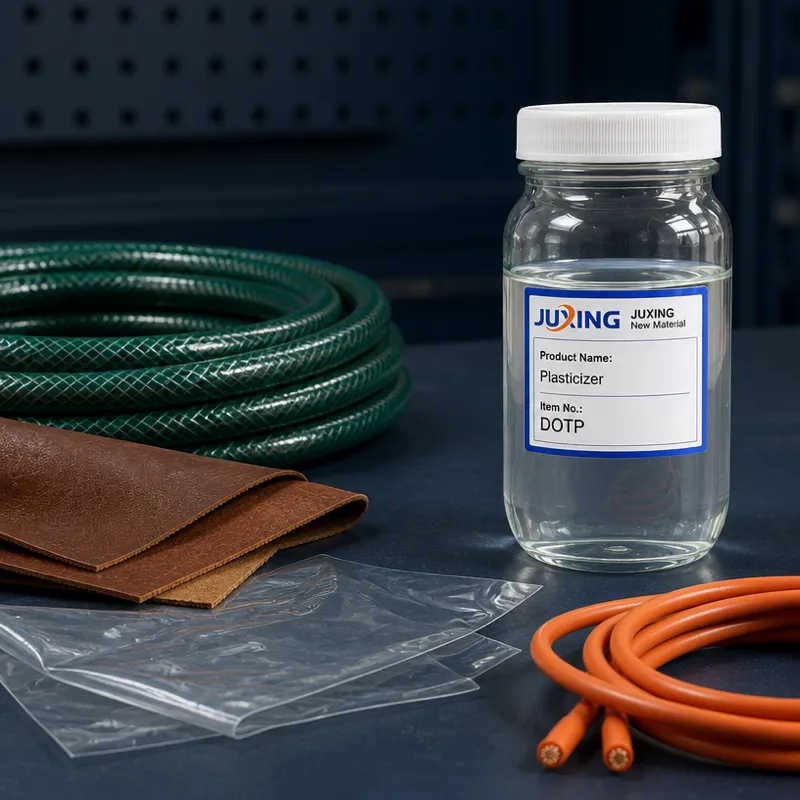
DOTP plasticizer, clear oily liquid, low acid and water content, high flash point, DEHP/DINP replacement, for PVC compounds, films, hoses, cables, and shoe materials.
Supplier:Juxing
DOTP plasticizer, clear oily liquid, low acid and water content, high flash point, DEHP/DINP replacement, for PVC compounds, films, hoses, cables, and shoe materials.
Dioctyl Terephthalate (DOTP), chemically known as Bis-(2-ethylhexyl) terephthalate (CAS 6422-86-2), is a high-performance plasticizer manufactured by Juxing New Material. It appears as a transparent oily liquid with low acid value, low water content, and a flash point of 210℃. Dioctyl Terephthalate (DOTP) is widely established as a direct, drop-in replacement for DEHP and DINP across a broad range of PVC applications, offering comparable plasticizing efficiency while meeting tighter regulatory standards in major export markets. For procurement teams sourcing a well-documented alternative to legacy phthalate plasticizers, Dioctyl Terephthalate (DOTP) provides a traceable performance baseline that simplifies formulation transition and supports compliance documentation requirements.
Most procurement managers already know that plasticizers are essential for softening PVC — that part is straightforward. But if you go further and ask which plasticizer grade provides the right balance of migration resistance, thermal stability, and regulatory standing without exceeding budget, the answer depends on your specific processing conditions and end-product requirements. That is precisely where understanding Dioctyl Terephthalate (DOTP)'s technical parameters becomes critical for making a well-grounded sourcing decision.
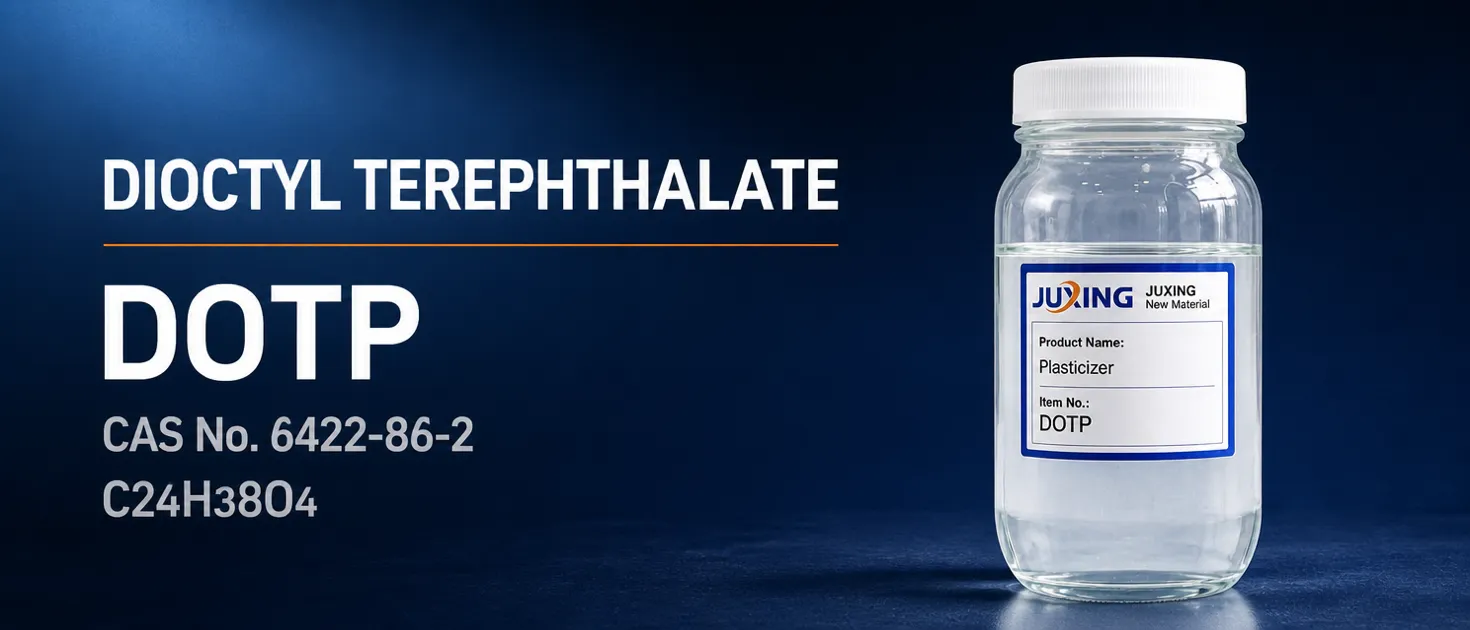
All parameters below are compiled from original TDS documents for Dioctyl Terephthalate (DOTP) supplied by Juxing. Use these values as the baseline for incoming inspection and batch-to-batch quality comparison.
| Parameter | Specification |
| Grade | DOTP |
| Appearance | Transparent oily liquid |
| Acid Value, max % | ≤0.02 |
| Specific Gravity at 20℃ | 0.981–0.985 g/ml |
| Color, APHA, maximum | ≤30 |
| Loss on Heat at 125℃, 3 hr | 0.11% |
| Flash Point | 210℃ |
| Water Content, max % | ≤0.03 |
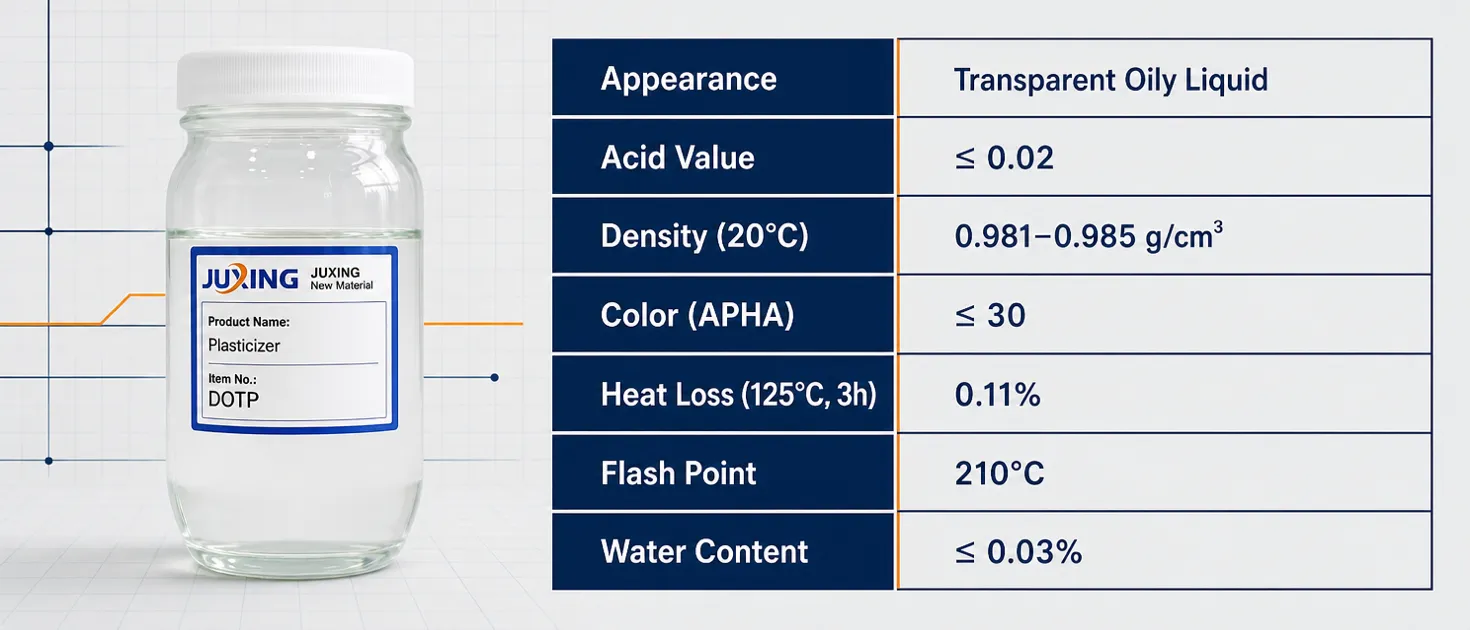
Understanding what each specification value means in practice helps avoid mismatched orders and costly production issues downstream. Here is a practical breakdown of the parameters that matter most when evaluating Dioctyl Terephthalate (DOTP) for your formulation.
A low acid value in Dioctyl Terephthalate (DOTP) indicates minimal free acid content, which directly reduces the risk of PVC compound degradation during processing and in service. For cable compounds and thin films, where long-term stability and color retention are required, specifying a strict acid value limit is a practical quality gate at incoming inspection. Suppliers who cannot document batch-level acid value control introduce variability that only surfaces after processing — at which point the cost of rework typically exceeds the savings from a lower material price per kilogram.
The 210℃ flash point of Dioctyl Terephthalate (DOTP) sits well above the typical PVC compounding temperature range of 160℃ to 190℃, providing a comfortable safety margin for storage and processing. For facilities storing large volumes of liquid plasticizer in enclosed areas or flexitanks, the flash point determines hazard classification under most regional chemical safety frameworks. Confirming this value against your site safety requirements is a necessary step before approving a new plasticizer grade, particularly for bulk storage configurations.
Low water content prevents foaming and viscosity inconsistencies during extrusion or calendering. Excess moisture is one of the more common causes of surface defects in PVC sheet and film production — it is also straightforward to control at the supplier level with standard drying and moisture-monitoring procedures. The APHA ≤30 color specification ensures that Dioctyl Terephthalate (DOTP) does not introduce visible yellowing in clear films, white cable insulation, or light-colored PVC articles. Both parameters can be verified on arrival with standard laboratory equipment, making them reliable quality gates for incoming inspection.
Specific gravity serves as a product identity check and supports accurate dosing by volume in continuous compounding lines. A deviation from the 0.981–0.985 g/ml range at 20℃ may indicate dilution or adulteration and should prompt further investigation before the batch is released to production.
In PVC compounding operations, Dioctyl Terephthalate (DOTP) is incorporated during the hot-mixing or extrusion stage. Its consistent specific gravity and low color allow batch-to-batch quality control to be maintained with standard laboratory testing, which is important for compound producers supplying downstream processors with tight incoming specifications. The low acid value also reduces the risk of long-term compound color shift during storage.
Cable insulation requires a plasticizer combining thermal stability with low migration over the product's service life. Dioctyl Terephthalate (DOTP) satisfies both criteria: the 210℃ flash point supports high-temperature extrusion without safety concerns, and the reduced migration tendency preserves insulation integrity over extended use. Industrial hoses in contact with hydraulic fluids or chemical media also benefit from DOTP's stability profile, particularly in applications where the hose is in sustained contact with other polymer surfaces.
For flexible PVC films and surface materials used in shoe uppers and artificial leather, color clarity and low surface migration are the primary selection criteria. Dioctyl Terephthalate (DOTP) with APHA ≤30 meets the visual quality requirements for clear and light-colored film products. Its documented status as a compliant DEHP alternative also supports export compliance requirements in markets that apply restrictions on restricted substance content in consumer articles.
Dioctyl Terephthalate (DOTP) from Juxing is available in flexitank, steel drum, and IBC tote tank formats, all configured for twenty-foot container loading. Steel drums and IBC totes are practical packaging choices for initial orders, allowing receiving inspection at a manageable volume before committing to flexitank bulk quantities. Confirm net weight per unit and container loading capacity with the supplier at the time of inquiry to avoid unit conversion issues in customs documentation and warehouse receiving records.
Juxing New Material supplies Dioctyl Terephthalate (DOTP) with full TDS documentation for incoming quality inspection. For buyers switching from DEHP or DINP, a small-scale trial batch is recommended to confirm dosage adjustments needed to achieve equivalent Shore A hardness in your specific PVC formulation, since optimal loading levels may vary by resin grade and compound recipe. Request a certificate of analysis for each shipment batch to support your quality management records and traceability requirements.
Supply consistency for a commodity plasticizer like Dioctyl Terephthalate (DOTP) depends on the supplier's production scheduling and inventory practices. Confirming lead times, minimum order quantities, and available packaging formats at the inquiry stage helps prevent scheduling disruptions later in the procurement cycle. For international buyers placing initial orders, clearly specifying the required acid value, water content, and color limits in the purchase order — rather than relying only on the product grade name — reduces the risk of receiving off-specification material that requires dispute resolution after shipment.